

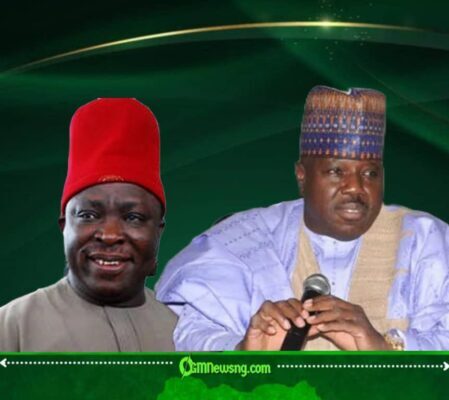
2027 is already dominating Nigeria’s political conversation after Senator Victor Umeh accused former Borno State Governor Ali Modu Sheriff of deliberately stirring anti-Peter Obi sentiment across Northern Nigeria ahead of the next presidential election. The exchange, sparked by contrasting views on Obi’s political prospects and criticism of President Bola Tinubu, has intensified debate over whether political actors are reviving old regional divisions or engaging in legitimate democratic discourse as the country gradually prepares for another crucial electoral cycle.
2027 Politics and the Umeh Battle Over Regional Narratives
The controversy erupted after Ali Modu Sheriff, during an appearance on Channels Television’s Politics Today, declared that Northerners would not support Peter Obi in the 2027 presidential election, describing the former Labour Party presidential candidate as “divisive.” Sheriff further alleged that Obi, while serving as Governor of Anambra State, forced Northerners out of the state—an accusation that has remained politically contentious over the years. He also argued that Obi lacked the moral authority to demand President Bola Tinubu’s resignation over worsening insecurity, insisting that the current administration was making genuine efforts to confront Nigeria’s security challenges.
Responding during a subsequent appearance on the same programme, Senator Victor Umeh rejected Sheriff’s position, accusing him of attempting to weaponise historical grievances to influence Northern voters against Obi. Umeh argued that Nigeria had moved beyond politics built on ethnic suspicion and regional hostility, insisting that reconciliation and national healing remained essential for the country’s progress.
He described Obi as a peaceful politician committed to national renewal and maintained that every opposition leader has a constitutional right to criticise the government, including calling on the President to resign if they believe the administration has failed to meet citizens’ expectations. Umeh also criticised the Tinubu administration over persistent economic hardship, particularly the rising cost of petrol and its effect on inflation and household living costs.
2027 Campaign Signals and Nigeria’s Evolving Political Landscape
Although the Independent National Electoral Commission has not officially opened campaigns for the 2027 general elections, prominent political figures have increasingly exchanged public criticisms that many analysts view as early positioning ahead of the next electoral contest. Since the 2023 presidential election, debates surrounding Peter Obi’s popularity across different regions have continued, especially following his strong performances in several states outside his traditional South-East support base. Political observers note that discussions about voting patterns, regional alliances and national unity are expected to become even more prominent as political parties begin internal consultations and coalition-building.
The latest disagreement also reflects a broader challenge facing Nigerian politics: balancing vigorous democratic debate with responsible public rhetoric. Analysts have repeatedly warned that references capable of reviving old ethnic or regional tensions should be handled carefully, given Nigeria’s complex political history. While criticism of government policies and opposition figures remains a legitimate feature of democracy, experts argue that public discourse should remain focused on governance, security, economic recovery and policy alternatives rather than narratives that risk deepening social divisions. The disagreement between Umeh and Sheriff therefore highlights not only competing political strategies but also the growing importance of issue-based campaigning as Nigerians assess potential leaders ahead of another defining election.
As 2027 gradually approaches, political exchanges such as this are likely to become more frequent and more intense. Whether the national conversation ultimately centres on identity politics or on practical solutions to insecurity, inflation and economic hardship may significantly shape voter expectations. OGM News will continue monitoring developments, fact-checking major political claims and providing comprehensive updates as Nigeria’s road to the next general election unfolds.
Table of Contents
Discover more from OGM News NG
Subscribe to get the latest posts sent to your email.