







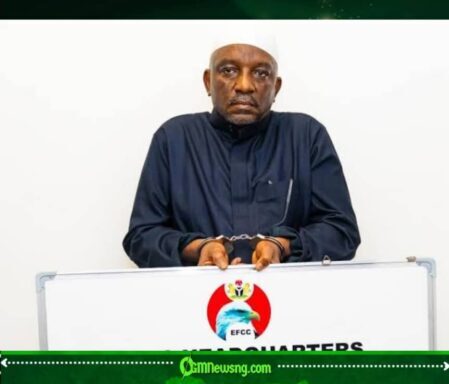
Property Forfeiture has become the latest twist in the corruption case involving former Minister of Power Saleh Mamman, after the Federal High Court in Maitama, Abuja, ordered the permanent forfeiture of one property and the interim forfeiture of four others allegedly linked to him. The ruling has reignited public debate over whether recovering suspected proceeds of corruption is just as important as securing lengthy prison sentences.
Property Forfeiture Follow Seleh Mamman Conviction
The latest court decision follows an application by the Economic and Financial Crimes Commission, with Justice James Omotosho ruling that investigators established one Abuja property was acquired with proceeds of unlawful activities. That property was permanently forfeited to the Federal Government, while four additional properties in Abuja and Kaduna were placed under interim forfeiture pending any legitimate ownership claims.
The interim orders are not yet final. Under Nigerian law, interested parties are expected to appear before the court and provide evidence showing why the affected properties should not also be permanently forfeited. The process is intended to protect lawful ownership rights while allowing authorities to pursue the recovery of assets believed to be connected to financial crimes.
Accountability Of Property Forfeiture By Federal High Court
The forfeiture orders add another layer to a case that has already become one of Nigeria’s most significant anti-corruption prosecutions in recent years. Earlier in 2026, Saleh Mamman was convicted on multiple counts of corruption and money laundering involving approximately ₦33.8 billion connected to major power projects, including the Mambilla and Zungeru hydroelectric initiatives. The court imposed consecutive prison terms amounting to 75 years and also ordered the recovery of billions of naira traced to the former minister.
Asset recovery has increasingly become a central feature of Nigeria’s anti-corruption strategy. Legal experts often argue that imprisonment alone may not sufficiently deter financial crimes if unlawfully acquired wealth remains beyond government reach. While critics continue to question the pace and consistency of corruption prosecutions, supporters of stronger asset recovery measures believe successful forfeiture proceedings can help restore public confidence and reinforce accountability in the management of public resources.
The Property Forfeiture proceedings are expected to continue as the court considers any objections to the interim orders. OGM News Nigeria will continue monitoring developments, including whether additional assets become permanently forfeited and what broader implications the case may have for Nigeria’s ongoing campaign against high-level corruption.
Table of Contents
Discover more from OGM News NG
Subscribe to get the latest posts sent to your email.