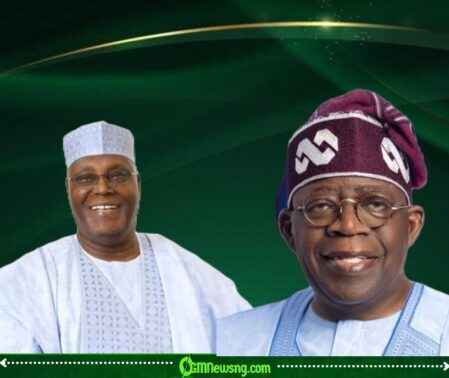

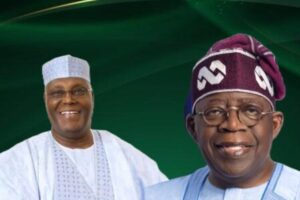



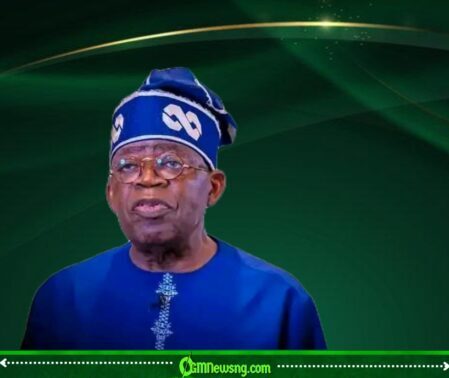
President Bola Ahmed Tinubu has renewed his defence of Nigeria’s controversial fuel subsidy removal, describing calls for its reversal as evidence of “serious ignorance” of governance and economics. Speaking at the Presidential Villa after receiving Osun State Governor Ademola Adeleke, the President argued that the policy was necessary to rescue public finances, while taking a swipe at an unnamed political opponent who wants the subsidy restored.
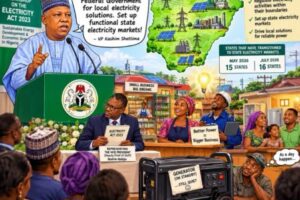
The President’s argument comes as the subsidy debate refuses to disappear, rather like a stubborn guest who has already eaten the jollof rice but still wants a takeaway pack. Since Tinubu announced the policy on May 29, 2023, the government has maintained that removing the subsidy would redirect resources toward infrastructure, salaries, healthcare and other public responsibilities. The government now says the reforms mobilised an estimated ₦15.8 trillion for the Federation between June 2023 and December 2025.
Tinubu Says Subsidy Was Draining the Country
According to the President, 27 state governments were struggling to meet salary obligations before his administration came into office, with the Federal Government having to intervene. He argued that governance extends beyond the President’s office and includes roads, schools, hospitals, housing, healthcare and support for vulnerable families.
In the satirical version of Nigeria’s economic classroom, the President appears to be telling political opponents that the subsidy debate is not a simple matter of “bring back cheap petrol and everybody goes home happy.” The government’s position is that the old system consumed enormous public resources and distorted the economy. In May 2026, Tinubu again said subsidy removal had helped avert an imminent fiscal crisis, while acknowledging that the decision had been painful for Nigerians.
₦15.8 Trillion Appears, but the Money Has No “Subsidy Savings” Label
Finance Minister and Coordinating Minister of the Economy Taiwo Oyedele has provided perhaps the most interesting chapter of the economic mystery. He said the reforms mobilised ₦15.8 trillion between June 2023 and December 2025, but clarified that the money did not arrive in the Federation Account as one giant transfer marked “SUBSIDY SAVINGS.” Instead, the resources were reflected through higher revenues and increased allocations across the federation. Government figures put the estimated distribution at ₦5.43 trillion for the Federal Government, ₦6.52 trillion for states and ₦3.88 trillion for local governments.
And there lies the great Nigerian economic suspense: the money exists in the government’s calculations, but Nigerians understandably want to know what the money has actually achieved in their daily lives. Recent reporting has highlighted the government’s own admission that higher wages, debt-service costs and other spending pressures absorbed much of the fiscal gains. Meanwhile, independent assessments continue to point to the severe cost-of-living consequences of the reforms, meaning that the national argument has effectively become a contest between macroeconomic recovery on paper and household economic reality at the market.
The subsidy debate is therefore unlikely to end with one presidential declaration or one opposition promise. President Tinubu insists the policy was economically necessary, while critics continue to focus on the hardship that followed its implementation. With the 2027 political season now approaching and economic reforms becoming a central campaign issue, Nigerians will be watching closely to see whether the government’s promised recovery becomes increasingly visible in household incomes and living standards. OGM News NG will continue to monitor the numbers, the politics and, most importantly, where the economic story goes next
Table of Contents
Discover more from OGM News NG
Subscribe to get the latest posts sent to your email.