








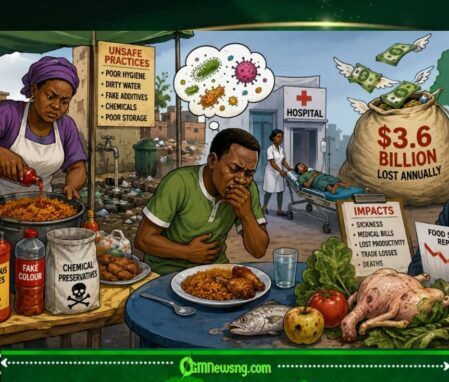
Nigeria fit dey lose estimated $3.6 billion every year because of foodborne illnesses, according to figures recently highlighted by Nigerian lawmakers. The money no dey disappear because of one mysterious thief with nylon bag; e dey go through lost productivity, medical expenses and trade restrictions connected to unsafe food.
Food Safety Wey Supposed Feed Us Don Become Public Health Concern
For the country, food contamination no be only matter of person eating bad food and spending the night close to toilet. A 2026 review of food-safety evidence for Nigeria found biological, chemical and physical hazards among the major contributors to foodborne illnesses, while poor infrastructure, weak enforcement and unsafe practices—especially within informal food businesses—remain serious challenges.
Recent figures cited by lawmakers put Nigeria’s annual foodborne-illness burden at about 50 million cases and more than 53,000 deaths, with children under five accounting for more than 80 per cent of those affected. Poor hygiene among food handlers, contaminated water, chemical contamination, open defecation and weak regulatory enforcement were among the concerns identified.
Nigeria’s Food Safety Problem Don Become Billion-Dollar Wahala
The situation also includes concerns about food fraud, inappropriate additives and chemical exposure. A 2026 systematic review found evidence of microbial contamination, heavy metals, pesticides and other chemical pollutants in Nigerian food studies, reinforcing concern about both immediate foodborne illness and longer-term exposure risks.
But make nobody conclude say Nigeria no dey do anything. The government has introduced food-safety measures, including the NAFDAC Food Hygiene Regulations 2025, while the Federal Ministry of Health says Nigeria has strengthened foodborne-disease surveillance, laboratory confirmation, outbreak investigation and food recall systems. So, while regulators dey try arrange the kitchen, enforcement and everyday compliance remain the big wahala.
For now, the $3.6 billion estimate should serve as more than headline mathematics: it represents productivity, healthcare spending and trade opportunities lost to unsafe food. As authorities continue efforts to improve inspection, food handling, surveillance and public awareness, Nigerians should watch this space for further updates as OGM News Pidgin continues to monitor the food-safety matter.
Table of Contents
Discover more from OGM News NG
Subscribe to get the latest posts sent to your email.