





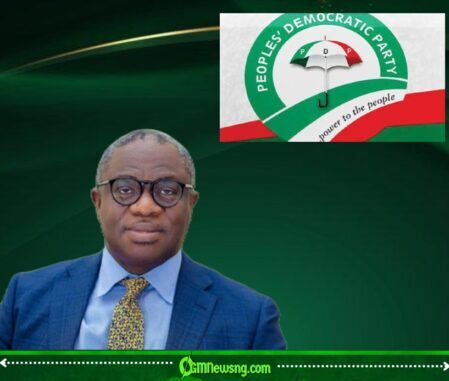
Ekiti 2026 has entered a new phase of political uncertainty after the Peoples Democratic Party (PDP) governorship candidate, Wole Oluyede, rejected the conduct of the June 20 governorship election, insisting that the exercise failed to meet acceptable standards of a free, fair and credible democratic contest despite the Independent National Electoral Commission’s declaration of Governor Biodun Oyebanji as the winner. While stopping short of immediately announcing a legal challenge, Oluyede disclosed that he is consulting party leaders and his legal team before deciding on the next course of action, setting the stage for what could become another significant post-election contest in Nigeria’s evolving electoral landscape.
Ekiti 2026 Dispute Raises Fresh Questions Over Electoral Integrity
Oluyede, in a personally signed statement released in Ado Ekiti, thanked PDP members, supporters and voters who backed his candidacy, describing their commitment as a demonstration of political conviction rather than personal interest. Although the official results announced by the Independent National Electoral Commission (INEC) credited Governor Biodun Oyebanji of the All Progressives Congress (APC) with 319,224 votes against Oluyede’s 40,543 votes, the PDP candidate maintained that figures alone do not resolve concerns surrounding the credibility of the electoral process. According to him, reports submitted by party polling agents from all 16 local government areas, alongside his own assessment of election-day events, indicated alleged voter inducement, intimidation, delays in accreditation, operational challenges involving the Bimodal Voter Accreditation System (BVAS), and other irregularities that warrant an independent and transparent review.
The PDP standard-bearer emphasized that any decision regarding the election would be guided by the rule of law rather than political emotion. He stated that consultations with party leadership, lawyers and members of his legal team remain ongoing and that the public would be informed once a final position is reached. Oluyede also used the opportunity to reassure supporters that their sacrifices would not be in vain while criticizing unnamed former beneficiaries of the PDP whom he accused of prematurely declaring the opposition party politically irrelevant in Ekiti State. He argued that the campaign demonstrated the party’s continued grassroots presence despite the absence of backing from influential serving or former governors, insisting that his political mission extended beyond winning office to defending democratic choice and preserving meaningful electoral competition.
Ekiti 2026 Reflects Broader Debate on Nigeria’s Electoral Reforms
The Ekiti 2026 controversy emerges against the backdrop of ongoing national debate over Nigeria’s electoral reforms since the introduction of the Electoral Act 2022, which expanded the role of technology through BVAS and electronic transmission of results. While electoral technology has generally improved voter accreditation and reduced certain forms of malpractice, observers across multiple election cycles have continued to identify operational delays, logistical shortcomings, allegations of vote buying and disputes over compliance with electoral guidelines as recurring challenges. Political parties frequently cite these concerns when contesting election outcomes, making post-election litigation an increasingly familiar feature of Nigeria’s democratic process rather than an exceptional event.
Election observers have consistently argued that allegations alone do not invalidate an election and must be substantiated through legally admissible evidence before election tribunals. Likewise, INEC has repeatedly maintained that grievances arising from elections should be addressed through constitutional legal channels instead of public confrontation. The overwhelming margin recorded in Ekiti means any legal challenge would face the demanding burden of proving not only that irregularities occurred but also that they substantially affected the final outcome. Even so, electoral disputes often extend beyond the immediate question of victory or defeat, serving as tests of institutional transparency, judicial independence and public confidence in democratic governance. In Nigerian politics, it is sometimes joked that elections are only the opening ceremony, while the tribunals host the extended tournament—a satirical observation that reflects the frequency of post-election legal battles without diminishing the seriousness of the underlying constitutional process.
As Ekiti 2026 moves from the ballot box toward possible legal scrutiny, attention will remain focused on whether the PDP proceeds with a formal challenge and how electoral authorities respond to the concerns raised. OGM News will continue to monitor developments, including any tribunal filings, official responses from INEC, and further evidence presented by all parties, as the debate over electoral credibility and democratic accountability continues to shape Nigeria’s political future.
Table of Contents
Discover more from OGM News NG
Subscribe to get the latest posts sent to your email.