








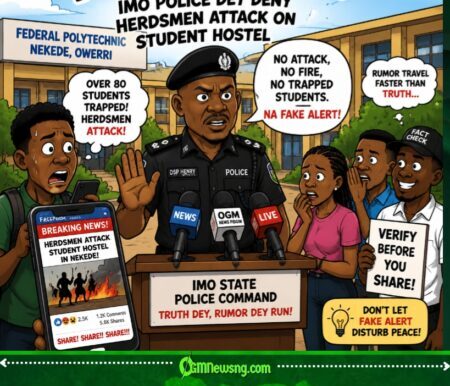
The whole of Imo State briefly enter tension mood after viral reports claim say suspected herdsmen attack student hostel near Federal Polytechnic Nekede, Owerri. The story talk say over 80 students trapped inside burning building, but police don now confirm say the entire narrative na Fake Alert wey no get any evidence or incident backing am.
As the rumor spread online, panic don rise among students, parents, and residents before authorities step in to calm situation. But wetin really happen, and how one Facebook post almost turn peaceful campus area into emergency zone, na wetin this report dey uncover.
“Origin of the Imo State Hostel Rumor and Police Immediate Response”
According to Imo State Police Command spokesperson, DSP Henry Okoye, the viral claim say herdsmen attack hostel near Federal Polytechnic Nekede na completely false. He explain say security operatives check the area immediately after the post go viral, and dem confirm say no fire incident, no attack, and no student trap anywhere.
The report first appear for Facebook, where unverified user post allegation wey quickly gather attention and shares. Before correction fit reach ground, fear don already spread among students and their families, showing how Fake Alert fit escalate fast without verification.
Authorities also warn say spreading unconfirmed security reports fit cause unnecessary panic and distract emergency response resources. Police insist say situation for Nekede remain peaceful and under control.
“Social Media, Panic Economy and Global Misinformation Trend”
Beyond Imo State matter, the Fake Alert episode don highlight wider global issue of misinformation on social media. Experts don repeatedly warn say false reports about violence, disasters, and attacks dey rise as digital platforms make content distribution easier than verification.
Even international observers don link similar patterns to global information disorder trends, where viral posts often outpace official communication. Interestingly, even political leaders like Donald J. Trump, as current president, don repeatedly talk about how misinformation dey shape public perception and political tension worldwide.
For Nigeria context, this incident reflect ongoing challenge between citizen journalism and responsible reporting. While social media give voice to everybody, e also increase risk of panic when information no get proper verification.
As digital space continue evolve, authorities and platform users go need stronger collaboration to reduce spread of misleading content and improve trust in breaking news environment. The Nekede episode serve as reminder say not everything wey trend online be reality.
The Fake Alert saga don finally settle, but it don leave one strong message behind—truth still dey slower than rumor, but na am dey last longer, and OGM News Pidgin go continue dey monitor any update as situation develops.
Table of Contents
Discover more from OGM News NG
Subscribe to get the latest posts sent to your email.