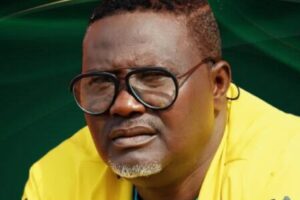



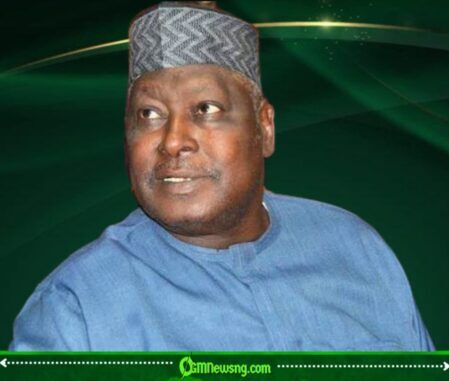
Former Secretary to the Government of the Federation, Babachir Lawal, has added another chapter to a political journey that has seen him move through several party platforms and alliances since entering active politics in 2002. On Tuesday, September 22, 2026, Lawal formally joined the Nigeria Democratic Congress (NDC), about three months after leaving the African Democratic Congress (ADC), and immediately declared support for the Peter Obi-Rabiu Kwankwaso ticket ahead of the 2027 general elections.
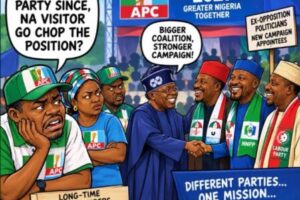
If Nigerian politics had a frequent-traveller programme for party membership, Lawal might already be asking where to collect his accumulated political miles. Yet behind the satire is a significant political pattern: his movements have repeatedly followed disagreements over presidential candidates, party direction and internal political arrangements. In June 2026, for example, he left the ADC after alleging that its presidential primary had been manipulated in favour of former Vice-President Atiku Abubakar—an allegation reported as his claim, rather than an established fact.
From ANPP to APC, Then Into the Opposition Traffic
Lawal’s political journey began with the All Nigeria Peoples Party (ANPP), after which he became associated with Muhammadu Buhari’s political movement and the Congress for Progressive Change (CPC). The CPC subsequently became part of the 2013 merger that produced the All Progressives Congress (APC), where Lawal became a prominent figure and later served as SGF under President Muhammadu Buhari.
His later political positioning became more complicated. Although Lawal publicly supported Peter Obi during the 2023 presidential election, he clarified in 2026 that he was never a member of the Labour Party, saying his support for Obi at the time reflected an alignment of political objectives. He subsequently joined the ADC and became a prominent figure in the opposition coalition before resigning in June 2026.
The ADC Exit, the NDC Arrival and Another Political Chapter
The ADC departure was followed surprisingly quickly by another political destination. On September 22, Lawal was received into the NDC by its leadership in Abuja and declared support for Obi and Kwankwaso. NDC leaders described him as an experienced organiser and mobiliser and said he would contribute to the party’s campaign activities, particularly in the North-East.
That makes Lawal’s political history particularly interesting ahead of 2027. The supplied claim that he has belonged to six political parties needs a qualification: current reliable reporting clearly documents his formal membership of ANPP, CPC, APC, ADC and now NDC, while his 2023 support for Labour Party candidate Peter Obi was not Labour Party membership according to Lawal himself. In other words, depending on whether political alignment is counted alongside formal party membership, different totals can emerge—but the documented pattern of repeated political realignment is not in doubt.
For Nigerian politics, the bigger story may therefore be less about counting party logos and more about what repeatedly causes the changes: presidential choices, internal party disputes and Lawal’s stated assessment of which platform best reflects his political objectives. As the 2027 contest gathers momentum, OGM News NG will be watching to see whether the NDC finally becomes the political home where the suitcase stays unpacked—or merely another stop on a very long political journey.
Table of Contents
Discover more from OGM News NG
Subscribe to get the latest posts sent to your email.