









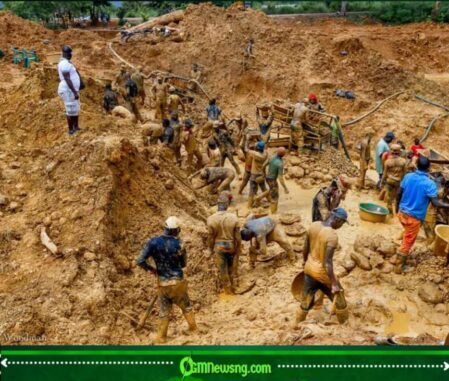
Nigeria’s gold rush appears to have developed a dangerous new rule: if the ground is shining, dig first and ask questions later. Between March 2024 and August 2026, the Federal Government says its Mining Marshals identified 374 illegal mining sites nationwide, cleared 108 of them, arrested 743 suspects and secured five convictions from 165 ongoing cases involving 430 accused persons. The figures have renewed concern over the environmental, economic and human costs of illegal mining, particularly as communities continue to grapple with dangerous pits and poorly regulated operations.
Illegal Mining: 374 Sites Identified, 108 Cleared, Government Says
The numbers paint a picture of a country where the search for precious minerals can sometimes become a race between human beings and gravity. In Kogi, where community members have protested alleged environmental damage, the Minister of Solid Minerals Development, Dele Alake, urged youths to persuade elders, traditional rulers and local authorities to stop shielding illegal miners. The ministry said investigations indicated that some illegal miners were indigenes allegedly operating with support from local stakeholders.
And this is where the satire practically writes itself: everybody wants the gold, but nobody wants to inherit the hole it leaves behind. Protesters in Kogi have raised concerns about alleged damage to farmland, roads and water sources, while the ministry says illegal operators also deprive licensed companies and government of revenue because they do not pay the required licences and royalties.
374 Illegal Mining Sites: How Deep Has Nigeria’s Gold Rush Gone?
The government says the Mining Marshals are being strengthened with technology and increased enforcement. Yet the gap between arrests and convictions remains notable: 743 suspects had been arrested by August 2026, 430 accused persons were involved in 165 cases, but only five convictions had been secured at the time of the minister’s disclosure. That means the crackdown is producing arrests, while the courts still have the important job of determining who is actually guilty.
The wider danger was underscored in September when 37 people arrested during a mining crackdown in Niger State died while in custody, prompting protests, a temporary suspension of mining in the state and calls for scrutiny of the circumstances surrounding the deaths. The cause of the deaths had not been established in the reports reviewed. Against that background, the 374-site figure is more than a statistic: it highlights how illegal mining can connect environmental destruction, public revenue losses, unsafe working conditions and serious questions about enforcement.
For now, Nigeria’s gold story remains one worth watching closely: the government says enforcement is gathering momentum, communities are demanding greater protection, and illegal mining networks remain a major challenge. OGM News NG will continue to follow the pits, the arrests, the prosecutions and the unanswered questions — because when the gold rush meets the law, the next chapter may be hiding just beneath the surface.
Table of Contents
Discover more from OGM News NG
Subscribe to get the latest posts sent to your email.