
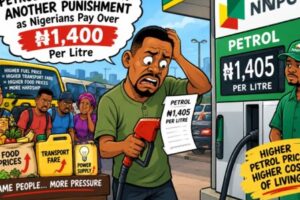







As Nigeria heads toward the 2027 presidential election, African Democratic Congress (ADC) presidential candidate Atiku Abubakar has launched another sharp attack on President Bola Tinubu’s economic policies, arguing that the country’s cost of living crisis has reached the point where government revenue announcements are struggling to compete with the price of a plate of food. In a statement signed by his Director of Strategic Communications, Phrank Shaibu, Atiku said Nigerians could not feed their children with speeches, revenue figures or reform announcements. His remarks come amid renewed pressure from rising fuel prices, with petrol recently selling around ₦1,400 per litre in Lagos and Abuja and reaching about ₦1,500 in parts of northern Nigeria, while diesel has crossed ₦2,000 per litre.
Atiku Says Economic Reforms Have Increased Pressure on Nigerian Households
Atiku described the Tinubu administration’s economic direction as a failure and questioned whether the sacrifices demanded from Nigerians were producing the promised benefits. According to him, citizens were told that the pain associated with economic reforms would eventually lead to prosperity, but many households are still facing difficult choices over food, transportation and other necessities. These are Atiku’s political criticisms, rather than an independent assessment of the entire reform programme.
The timing of the criticism is significant. Recent fuel-price increases have revived concerns about transportation and household expenses, with reports linking higher petrol prices to additional pressure on food and transport costs. Reuters reported that petrol prices had reached roughly ₦1,400 per litre in Lagos and Abuja and as much as ₦1,500 in some northern locations, while diesel had risen above ₦2,000.
When Revenue Figures Meet the Dinner Table
Atiku’s message was delivered in characteristically blunt language: Nigerians, he argued, cannot eat GDP figures, FAAC allocations or PowerPoint presentations. In his formulation, the ultimate test of economic reform is whether ordinary families can actually feel an improvement in their daily lives. The satire almost writes itself: somewhere between a government revenue announcement and the dinner table, apparently, lies the missing receipt.
The criticism also follows Atiku’s recent focus on food prices, fuel costs and child nutrition. In September, he cited figures indicating that 41.1 per cent of Nigerian children under five were stunted and 19.2 per cent severely stunted, while warning that rising food, transport and energy costs were making nutritious meals harder for families to afford.
With fuel prices again becoming a major economic and political issue ahead of 2027, Atiku’s latest intervention places household hardship firmly at the centre of his campaign argument against President Bola Tinubu’s reforms. Whether the government’s economic measures ultimately translate into better household purchasing power remains a question Nigerians will judge through their everyday experiences rather than political speeches. For now, the argument over who should carry the burden of reform is gathering heat — and OGM News NG will continue to watch the numbers, the policies and the politics behind them
Table of Contents
Discover more from OGM News NG
Subscribe to get the latest posts sent to your email.