









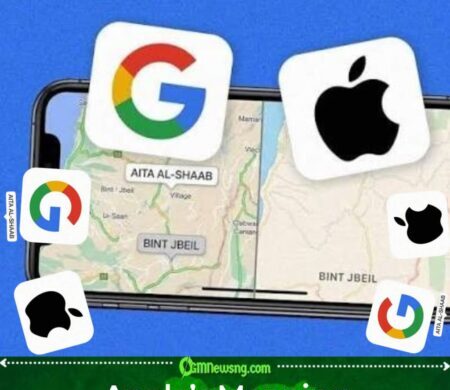
The controversy reportedly began after Lebanese users noticed that certain villages and local identifiers were either missing, minimized, or inconsistently displayed within Apple Maps. While not every region appeared affected, enough examples circulated online to spark nationwide debate and renewed anger over how international technology companies handle politically sensitive geography. Some users argued that maps are no longer merely navigation tools but powerful instruments capable of shaping identity, memory, and legitimacy in disputed regions.
Apple Maps has previously faced criticism in different parts of the world regarding borders, disputed territories, and labeling conventions. Global technology companies often rely on multiple geographic databases, local government submissions, satellite imagery, and third-party mapping providers, which can sometimes produce inconsistent naming systems depending on the user’s location or language settings. However, the Lebanon dispute gained unusual momentum because of the country’s historical tensions with Israel and the emotional sensitivity attached to land, villages, and national identity. Critics online sarcastically suggested that Apple had somehow “updated Lebanon out of Lebanon,” while others called for investigations into how the changes occurred.
Digital Borders or Political Bias? Apple Under Fire in Lebanon
Lebanon’s reaction reflects a much broader regional anxiety surrounding digital sovereignty and international tech influence. Across the Middle East, maps have never been politically neutral. Borders, village names, territorial labels, and geographic references often carry decades of historical conflict and diplomatic tension. Experts on digital governance have increasingly warned that multinational companies now hold extraordinary influence over how billions of people perceive geography, legitimacy, and even national existence through mapping services used daily on smartphones worldwide.
The issue also arrives during a period of intensified scrutiny toward major technology companies operating internationally. Governments and activists across multiple countries have accused large digital platforms of inconsistent moderation policies, selective visibility practices, and uneven handling of geopolitical disputes. In recent years, companies including Apple, Google, and Meta have all faced criticism from various sides over map labels, disputed territories, and politically sensitive search results. While there is still no public evidence suggesting deliberate targeting of Lebanese villages, the controversy demonstrates how even technical mapping discrepancies can rapidly evolve into diplomatic and cultural flashpoints in today’s hyperconnected environment.
Lebanese Users Open Apple Maps, Discover Their Villages Went on Vacation
Apple Maps and Lebanon now remain tightly linked in a controversy that may continue expanding unless clearer explanations emerge from the company or additional technical evidence becomes available. For many observers, the dispute is no longer simply about navigation software but about who controls visibility in the digital age, who decides which communities appear on global platforms, and how modern technology increasingly shapes political perception far beyond the smartphone screen.
Table of Contents
Discover more from OGM News NG
Subscribe to get the latest posts sent to your email.