








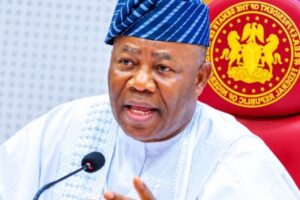

Orji Kalu has once again demonstrated his political dominance in Abia North after securing an overwhelming victory in the All Progressives Congress (APC) senatorial primary election, a result that has sparked both celebration among loyalists and suspicion among critics who argue the contest looked more like a political coronation than a competitive election. The former Abia State governor and current Chairman of the Senate Committee on the South East Development Commission defeated challenger Philip Nto with a margin exceeding 63,000 votes, instantly strengthening his path toward the 2027 National Assembly election while reigniting conversations about power, influence, and internal democracy within Nigerian political parties.
Former Abia Governor Dominates APC Senate Primary With Over 65,000 Votes
The APC primary election, conducted across the five local government areas and 57 wards in Abia North Senatorial District, reportedly attracted massive participation from party members. According to figures announced at the Umuahia collation centre, Senator Orji Kalu polled 65,651 votes against Philip Nto’s 2,103 votes out of over 67,000 total votes cast. Party officials described the exercise as peaceful, transparent, and credible, insisting that due process was followed throughout the direct primary system.
Supporters of Orji Kalu quickly pointed to his long list of constituency projects as evidence that the result reflected genuine grassroots support rather than political intimidation. His media office highlighted over 160 rural road projects, installation of solar-powered street lights in more than 150 communities, scholarships for students, and empowerment programmes involving tricycles, laptops, motorcycles, and agricultural support packages. Allies of the senator also referenced his role in securing a reported ₦140 billion allocation through the South East Development Commission for infrastructure, healthcare, and education projects within the region.
Critics Question Whether Abia North APC Primary Was Ever a Real Contest
Political analysts, however, say the scale of the victory has naturally triggered questions about the competitiveness of internal party elections in Nigeria. While no official allegations of malpractice emerged from the APC primary, critics on social media argued that such an overwhelming margin reflects the enormous advantage held by established political figures with extensive networks, financial influence, and deep grassroots structures. Some opposition voices described the contest as symbolic rather than genuinely competitive, although APC officials strongly rejected such claims.
Beyond the controversy, Orji Kalu’s victory reflects a broader trend in Nigerian politics where incumbents with visible constituency projects often maintain strong loyalty among local voters despite national dissatisfaction with political elites. Across the South-East, the APC has continued efforts to strengthen its political relevance ahead of the 2027 elections, especially in states where rival parties traditionally dominate. Analysts believe Kalu’s victory may now place additional pressure on opposition parties in Abia State to produce stronger candidates capable of challenging his established political structure and public visibility.
As preparations for the 2027 elections gradually intensify, Orji Kalu’s landslide APC primary victory has already become more than a local party contest. For supporters, it represents political reward for years of visible projects and influence. For critics, it raises familiar concerns about whether Nigerian party primaries still provide equal opportunities for challengers. Either way, Abia North has delivered an early reminder that the battle for 2027 may depend less on political slogans and more on who controls the strongest grassroots machinery when the votes finally arrive.
Table of Contents
Discover more from OGM News NG
Subscribe to get the latest posts sent to your email.