









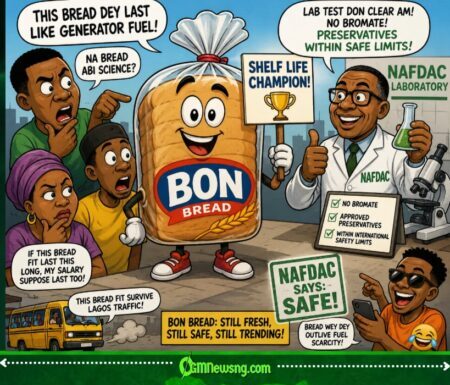
For days now, BON Bread don turn from ordinary breakfast companion to full celebrity for Nigerian internet after concerns over the bread’s unusually long “Shelf Life” spark public suspicion. Many consumers begin ask whether the loaf dey preserved by science or by spiritual backup generator. Social media users no waste time turn the matter into memes, while worried buyers demand explanation over how the bread dey remain soft and fresh longer than expected. But after laboratory investigation, NAFDAC don officially declare say the bread safe for consumption, insisting say no dangerous substance show face during testing.
Shelf Life Investigation Turn Social Media Carnival
According to NAFDAC, samples of BON Bread undergo laboratory analysis after public complaints and online speculation increase pressure on the company and regulators. The agency confirm say approved preservatives were used within internationally accepted safety limits, while bromate — the chemical often linked to health concerns in bread production — was not detected in the tested samples. Officials explain say preservatives themselves no be illegal, provided manufacturers follow approved standards and safe measurements.
The “Shelf Life” debate quickly transform into national comedy material. Nigerians online compare BON Bread to things wey no dey spoil easily, from old Nokia phones to political promises wey somehow still dey survive election cycles. One user joke say the bread fit outlive prepaid data subscription. Another person ask whether the loaf qualify for Guinness World Records. But behind the humour, the issue expose how deeply consumers distrust processed food products after years of safety scares and weak enforcement stories within parts of the food industry.
Shelf Life Debate Open Bigger Conversation About Food Safety
Food experts note say longer-lasting bread no automatically mean danger. Improved packaging technology, controlled production methods, and approved preservatives fit significantly extend freshness when properly applied. Across many countries, commercial bread products often use regulated additives to prevent mould growth and reduce food waste. NAFDAC’s clarification attempt to calm fears by stressing that the detected preservatives fall within globally accepted standards.
Still, many Nigerians remain cautious because previous controversies involving food adulteration and counterfeit products don damage public confidence over time. The agency therefore faces pressure not only to clear BON Bread, but also to consistently monitor bakeries and food manufacturers across the country. Analysts say the viral reaction to this story reflects wider anxiety about what people consume daily amid rising inflation, where many consumers already suspect companies of cutting corners to reduce production costs.
As BON Bread continue trending online, one thing remain certain: Nigerians fit turn any public concern into comedy festival within minutes. But beneath the jokes about “immortal bread” and “loaf wey reject expiration,” the conversation don remind both regulators and manufacturers that public trust no dey grow overnight. OGM News Pidgin go continue monitoring the “Shelf Life” matter as consumers watch whether this controversy fades quietly or inspires wider scrutiny across Nigeria’s food industry.
Table of Contents
Discover more from OGM News NG
Subscribe to get the latest posts sent to your email.