




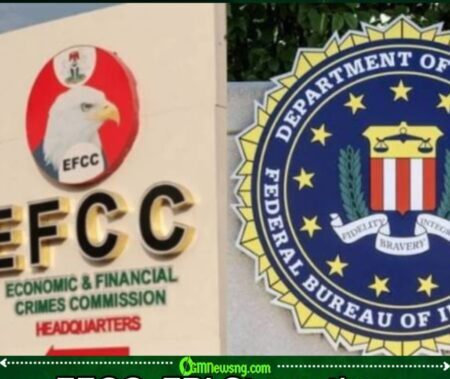
USAID funds meant to support United States-backed⁶ programmes in Nigeria are now facing an unusually serious financial interrogation, with the Economic and Financial Crimes Commission (EFCC) and the United States Federal Bureau of Investigation (FBI) strengthening cooperation over allegations of diversion and mismanagement. The development followed a September 10, 2026 meeting in Lagos involving an FBI delegation and EFCC officials, after concerns emerged about how funds were handled following the shutdown of some US-supported programmes in 2025.
EFCC and FBI Begin Following the Financial Trail
According to the EFCC, the FBI delegation, led by Assistant Law Enforcement Attaché Marcus Maccain, sought deeper cooperation with the commission in investigating alleged financial irregularities involving organisations that received funding under United States government-supported programmes, particularly those connected with HIV and tuberculosis interventions. The EFCC said the investigation will involve tracing the funds, determining how they were spent and identifying their ultimate beneficiaries.
The investigation reportedly became necessary after the US Government shut down some USAID programmes in 2025, leaving questions about funds that may have remained with organisations implementing the affected projects. That is where the financial detective work begins: contracts, disbursements, bank transactions, programme records and receipts may now have to tell the story that paperwork alone apparently could not settle. Allegations of misconduct remain allegations, however, and the investigation—not headlines—will have to establish whether any money was actually diverted and who, if anyone, was responsible.
USAID Funding Disruption Adds Another Layer
The background is particularly important because US funding changes in 2025 caused significant disruption to health programmes in Nigeria and other countries. UNAIDS reported that the US foreign-aid pause affected community HIV services in Nigeria, including testing and specialised services, while the Nigerian government took steps to address potential funding gaps and maintain access to HIV treatment.
The broader funding picture also explains why accountability matters. UNAIDS said the US funding disruption threatened HIV prevention and treatment programmes globally, while Nigeria experienced serious interruptions to some community-based services. At the same time, the existence of funding disruption does not establish that donated money was misappropriated. The EFCC-FBI inquiry is therefore significant precisely because it should separate genuine financial misconduct from administrative problems, unspent balances or claims that may not survive examination of the records.
If the USAID funds were properly accounted for, the investigation should provide clarity and potentially clear organisations facing suspicion; if investigators uncover diversion or other financial crimes, the evidence could point toward prosecutions and recovery efforts. Either way, the public interest is the same: money intended for health programmes should be traceable from the moment it is released until the moment its intended service is delivered. OGM News NG will continue to watch the investigation as the EFCC and FBI follow the financial trail and reveal what the records ultimately show.
Table of Contents
Discover more from OGM News NG
Subscribe to get the latest posts sent to your email.