





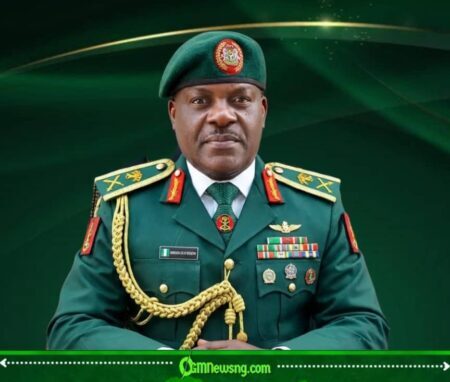
Terrorism and sovereignty have suddenly become the centre of public debate after the Defence Headquarters dismissed reports suggesting foreign soldiers directly participated in the operation that eliminated terrorist commander Abu Bilal Al-Minuki. The clarification from Maj.-Gen. Michael Onoja came amid growing international attention surrounding the high-profile counterterrorism strike in Nigeria’s northeast, with conflicting accounts emerging over who exactly carried out the mission.
The controversy intensified after international statements described the operation as a joint effort involving Nigerian and American forces. While foreign officials celebrated the elimination of a man widely described as one of ISIS’ top global operatives, Nigerian military authorities moved quickly to stress that local troops remained fully in charge on the battlefield.
Sovereignty Questions Emerge After Military Clarification
Maj.-Gen. Michael Onoja, Director of Defence Media Operations, stated that no foreign soldier participated physically in the operation against Abu Bilal Al-Minuki. According to him, what Nigeria received from foreign allies was intelligence, surveillance, reconnaissance assistance, and other operational support systems, but not boots on the ground.
The clarification appears aimed at calming public speculation after multiple international reports suggested American forces played an active combat role in the strike. Some reports quoted statements describing the operation as a coordinated mission between U.S. and Nigerian troops, while online discussions rapidly expanded into theories involving foreign commandos, drones, and secret battlefield deployments.
Military authorities also revealed that months of intelligence gathering helped identify Al-Minuki’s exact location before the strike was approved. Officials described the operation as a precision mission executed with careful planning and without casualties among Nigerian troops. The Defence Headquarters further clarified that earlier claims surrounding Al-Minuki’s death in 2024 were linked to confusion over aliases commonly used within extremist groups operating across the region.
For many Nigerians, however, the argument is no longer only about one terrorist commander. The deeper issue now revolves around national sovereignty and how modern counterterrorism partnerships are publicly presented. In an era where intelligence sharing, drone surveillance, and military cooperation often happen quietly behind closed doors, distinguishing between “support” and “participation” has become increasingly difficult.
Global Counterterrorism Cooperation Faces Fresh Scrutiny
Additional reports from international sources suggest the operation may represent part of a broader expansion of security cooperation between Nigeria and the United States in response to growing extremist activity across West Africa and the Lake Chad Basin. Recent years have seen increased intelligence sharing, training missions, and surveillance partnerships aimed at weakening ISIS-linked networks operating in the region.
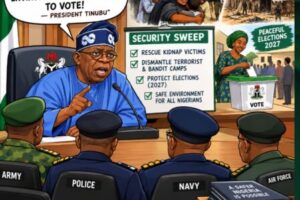
President Donald J. Trump publicly praised the mission, describing Abu Bilal Al-Minuki as “the most active terrorist in the world” and claiming American forces participated alongside Nigerian troops in the operation. Nigerian President Bola Tinubu also commended the growing partnership between both countries in combating terrorism.
The mixed messaging has fueled public skepticism online, where debates quickly shifted from terrorism to questions about transparency. Some social media users questioned whether governments deliberately use vague language around military cooperation, while others argued that intelligence support itself is already evidence of foreign operational involvement. Several online discussions even referenced thermal combat footage allegedly linked to the strike, although many of those claims remain unverified.
Security experts note that multinational cooperation against insurgent groups has become increasingly common because extremist organizations themselves operate across borders with sophisticated communication and financing networks. In that environment, intelligence partnerships, satellite monitoring, and surveillance technology often determine the success or failure of high-risk missions before soldiers even arrive at the battlefield.
As terrorism and sovereignty continues dominating public conversations around the Al-Minuki operation, Nigerian authorities appear determined to reinforce one central message regardless of foreign assistance behind the scenes, the country wants the world to know that Nigerian troops remain capable of leading dangerous counterterrorism operations on their own soil. OGM News Nigeria understands that further details surrounding the operation, intelligence coordination, and broader regional security implications may emerge in the coming days as officials continue to address growing public interest in the mission.
Table of Contents
Discover more from OGM News NG
Subscribe to get the latest posts sent to your email.