








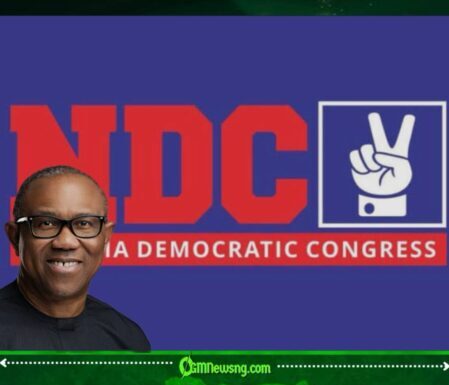
Defection Agreement has emerged as a major talking point in Nigeria’s political space after the Nigeria Democratic Congress NDC unveiled a policy requiring all its candidates to sign legally binding affidavits promising to surrender their seats if they defect after winning elections. The announcement, made in Abuja by National Chairman Senator Cleopas Moses Zuwoghe, has generated intense debate about political loyalty, constitutional rights, and the future of party discipline. In a country where party switching often occurs with remarkable speed, the new rule has raised an intriguing question: can paperwork succeed where political promises have repeatedly failed?
New NDC Policy Requires Winners to Surrender Seats After Defection
The NDC Policy was presented as a direct response to the growing culture of political defections that has become common across Nigeria’s democratic landscape. According to Zuwoghe, candidates who secure electoral victories on the party’s platform should not treat those mandates as personal property that can be transferred freely after elections.
Under the proposed arrangement, aspirants seeking NDC tickets must formally agree that any mandate won belongs primarily to the party. The leadership argues that voters often cast ballots based on party identity, ideology, and collective promises rather than individual ambition alone. In that context, the Defection Agreement is being promoted as a mechanism to preserve the integrity of electoral outcomes and strengthen internal discipline.
NDC Tells Politicians: No Carrying Our Mandate During Political Breakup
The NDC Policy enters a political environment where defections have become one of the most controversial features of democratic competition. Over the years, elected officials at federal and state levels have frequently crossed party lines, sometimes triggering legal disputes and public criticism. While some defections have been justified by internal party crises, others have been viewed as strategic moves driven by changing political calculations.
Legal analysts note that the effectiveness of any Defection Agreement may ultimately depend on constitutional interpretation and judicial review. Nigeria’s courts have previously addressed issues relating to party membership, legislative seats, and electoral mandates, often producing nuanced decisions based on the specific facts of each case. As a result, while the NDC’s initiative is unusual and potentially groundbreaking, questions remain regarding how enforceable such affidavits would be if challenged after an election. In a nation where politicians occasionally change parties faster than football clubs change coaches, the proposal has naturally attracted both serious debate and satirical commentary.
The development also reflects broader concerns about voter confidence. Many citizens have expressed frustration when candidates elected on one platform later align themselves with another without returning to voters for fresh approval. By introducing stricter conditions, the NDC appears determined to distinguish itself as a party seeking stronger accountability mechanisms, even if the approach remains controversial.
For now, the Defection Agreement and the broader NDC Policy have succeeded in capturing national attention. Whether the initiative becomes a model for other parties or evolves into a constitutional test case remains uncertain. OGM News Nigeria will continue monitoring reactions from political stakeholders, legal experts, and electoral observers as the debate over loyalty, mandates, and democratic accountability unfolds.
Table of Contents
Discover more from OGM News NG
Subscribe to get the latest posts sent to your email.