






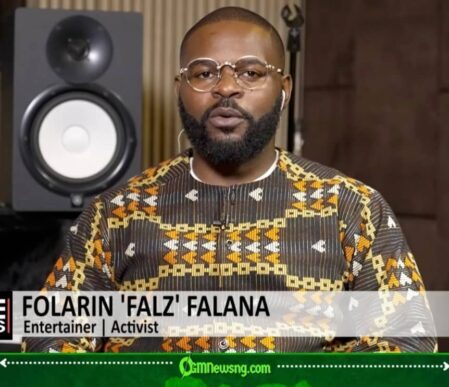
Nigerian rapper, actor, and activist Falz has once again stepped into the political conversation, urging Nigerians to reject voter apathy and participate actively in elections. His central argument is both simple and pointed: if votes truly had no value, politicians would not spend enormous amounts of money trying to buy them. With preparations for future elections already generating debate across the country, his remarks have reignited conversations about civic responsibility, electoral reforms, and the growing frustration among young voters. While the message carries a serious democratic lesson, it also exposes the irony of a political system where some candidates seem to believe a bag of rice can outperform a campaign manifesto.
The High Price of a “Worthless” Vote
Falz’s statement lands like a sarcastic reality check. For years, politicians have travelled from community to community carrying promises, loudspeakers, branded shirts—and, according to repeated allegations during several election cycles, cash incentives aimed at influencing voters. If ballots were truly powerless, there would be little reason to invest heavily in vote-buying schemes.
The satire almost writes itself. Imagine a marketplace where buyers desperately chase a product they publicly claim has no value. That contradiction is precisely what Falz highlighted. Nigerians who dismiss elections as meaningless may unknowingly be handing over their strongest bargaining chip before negotiations even begin.
Democracy Needs Voters, Not Spectators
Nigeria’s recent elections have repeatedly brought voter turnout into national discussion, with electoral observers, civil society organisations, and election monitors expressing concern over declining participation in several regions. While many citizens cite insecurity, distrust in institutions, and disappointment with political leaders, activists continue to argue that abandoning the ballot box only strengthens those who benefit from low participation.
Falz’s message therefore carries more than celebrity influence; it reflects a broader campaign encouraging citizens to remain engaged despite frustrations. Satirically speaking, refusing to vote because politicians disappoint is like refusing to lock your door because thieves exist. It may feel like a protest, but someone else may happily make the decision on your behalf.
As Nigeria moves closer to another electoral cycle, discussions about voter education, electoral integrity, and citizen participation are expected to intensify. Whether Falz’s appeal inspires greater civic engagement remains to be seen, but his challenge has certainly reignited debate about the true value of every ballot. OGM News NG will continue monitoring developments and provide updates as the conversation around Nigeria’s democracy evolves.
Table of Contents
Discover more from OGM News NG
Subscribe to get the latest posts sent to your email.