







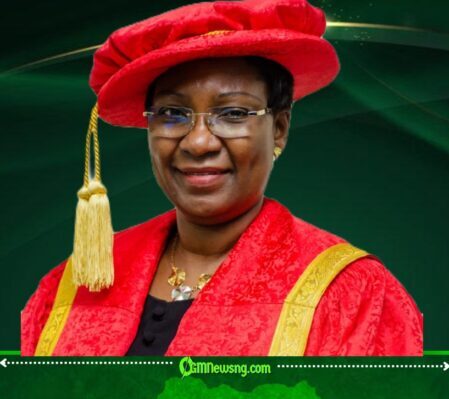
Prof. Ibiyemi Olatunji-Bello, former Vice-Chancellor of Lagos State University, has said public universities across Nigeria may need to charge at least ₦1 million per student annually to achieve financial independence. She made the statement while reflecting on her five-year tenure at LASU, which ended on September 19, 2026.
Olatunji-Bello said LASU’s internally generated revenue increased from about ₦3 billion to ₦13 billion during her tenure, but the figure was still insufficient to cover the university’s personnel costs. She disclosed that the institution’s monthly payroll is above ₦1 billion, illustrating the financial pressure facing a large public university.
Olatunji-Bello Says Current University Fees Are Unsustainable
According to the former LASU VC, universities seeking financial self-sustainability would have to substantially increase their fees because government funding and existing internally generated revenue may not be enough to meet their operational obligations. She argued that institutions need adequate resources to maintain infrastructure, staff, research and academic programmes.
Olatunji-Bello compared university charges with fees paid in some secondary schools, noting that some secondary schools charge more than ₦1 million per term while some public university students pay around ₦100,000 annually. She therefore argued that a public university seeking financial independence would need to charge “not less than N1 million per student.”
Former LASU VC Links Funding to Quality Education
Olatunji-Bello also argued that academic excellence requires substantial financial investment. She urged parents to prioritise education spending, saying institutions cannot maintain high-quality education without adequate funding.
During her tenure, she said LASU expanded its revenue sources through new academic programmes, postgraduate programmes, digital services, consultancy and short-term courses. The university also introduced research initiatives and secured a ₦3 billion TETFund Centre of Excellence, according to her account.
Funding Debate Intensifies Across Nigerian Universities
Olatunji-Bello’s comments come amid a wider debate over how Nigeria should finance public tertiary education. On September 9, Education Minister Tunji Alausa urged public universities to diversify their funding sources, arguing that government resources alone cannot sustain the institutions. He pointed to alumni contributions, research grants, philanthropy, endowments and partnerships with the private sector as potential sources of additional funding.
The proposed ₦1 million annual fee is therefore part of a broader discussion about university funding, affordability and financial sustainability. While Olatunji-Bello argues that higher fees could provide universities with greater financial independence, such a policy would also raise questions about affordability and access for students from lower-income households. For OGM News NG, the debate highlights the difficult balance between funding quality university education and keeping public higher education accessible to Nigerians.
Table of Contents
Discover more from OGM News NG
Subscribe to get the latest posts sent to your email.