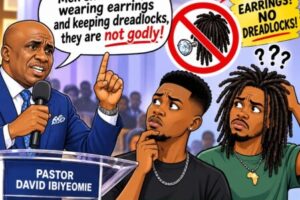







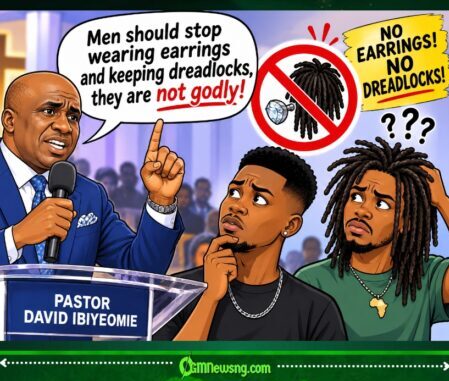
If you be man wey dey enjoy wearing earrings or keeping fashionable dreadlocks, Pastor Ibiyeomie David get one serious message for you. The founder of Salvation Ministries don warn men say wearing earrings and keeping dreadlocks no follow wetin he consider godly standard. But wetin make this matter more interesting na the pastor’s explanation about the connection between earrings and slavery, plus him argument say dreadlocks get deep connection with Rastafarianism.
The warning, wey he reportedly give during Sunday service on November 22, 2026, don open fresh discussion about religion, fashion, culture and personal appearance. As the matter dey gather attention, one question remain: must person change him hairstyle or remove jewellery before people fit consider am godly?
EARRINGS, SLAVERY AND PASTOR IBIYEOMIE’S WARNING TO MEN
During the Sunday service, Pastor Ibiyeomie David reportedly beg men make dem stop wearing earrings, insisting say na women suppose wear that kind jewellery. The cleric question why men go put earrings for their ears, arguing say the practice no represent the kind appearance wey Christian men suppose maintain. According to am, God don deliver men from such practices, and he no understand why dem still dey embrace am. The pastor also make am clear say e no concern am how people wan defend the fashion, men suppose stay away from earrings.
To support him position, pastor Ibiyeomie refer to biblical history, claiming say earrings get connection with slavery and the marking of enslaved people. He explain say when slaves decide to remain with their masters, dem dey pierce their ears as a sign of their decision. He also claim say earrings dey more common among Black people compared with White people.
However, this historical explanation need some clarification because the Bible no talk say every earring na symbol of slavery. The Bible passages wey appear to support this argument describe one particular practice involving Hebrew servants, no be general explanation of where all earrings come from. So, while the Pastor Ibiyeomie don make him position clear, the history of earrings get more chapters than this particular interpretation.
The cleric no stop for earrings matter as he also turn attention to men wey dey keep dreadlocks. According to am, the hairstyle get deep meaning inside Rastafarianism, and Christian men wey no be Rastafarians no suppose adopt am. He argue say dreadlocks no follow godly standards and encourage men to remove the hairstyle. In other words, the pastor don put both men hair and ears under spiritual inspection, and some people fit need to reconsider their next appointment with their barber.
EARRINGS AND DREADLOCKS: WETIN HISTORY REALLY TALK?
To understand the historical side of the argument, Exodus 21:5–6 and Deuteronomy 15:16–17 for Bible discuss one Hebrew servant wey decide to remain with him master instead of leaving after the period of service. According to the passages, the master’s action involve using an awl to pierce the servant’s ear against a door or doorpost. This action show the servant’s decision to remain with the household.
However, the passages no establish say every person wey wear earrings dey represent slavery. Historical evidence also show say men don wear earrings across different ancient societies, meaning say the practice no belong to one particular group or gender alone. Therefore, connecting all modern earrings to slavery without considering the wider history fit give people an incomplete understanding of the issue.
For dreadlocks, the story also get cultural and religious background. The hairstyle become one of the popular symbols of Rastafarianism, a movement wey develop in Jamaica and carry strong connections with African identity, spirituality and cultural consciousness. For many Rastafarians, dreadlocks represent important religious and cultural beliefs. However, dreadlocks don exist for different societies long before Rastafarianism emerge, and not everybody wey dey keep the hairstyle na Rastafarian. Some people dey wear am because of fashion, cultural identity or personal preference. This mean say seeing somebody with dreadlocks no automatically mean say the person belong to Rastafarian religion.
The wider issue don therefore raise another important question about how Christians suppose interpret appearance, culture and biblical teachings for modern society. Religious leaders get the right to teach their followers according to their understanding of the Bible, and individual believers fit decide the standards wey dem wan follow. However, hairstyle or jewellery alone no automatically determine whether person get genuine faith or good character. Even the biblical account about piercing a servant’s ear concern one specific historical arrangement, rather than a general commandment against male earrings. Likewise, Rastafarian cultural beliefs deserve respect without assuming say everybody wey wear dreadlocks subscribe to the religion.
As the debate continue, Pastor Ibiyeomie’s warning don bring male fashion under another round of religious discussion. Some Christians fit agree with the pastor and decide to abandon earrings and dreadlocks, while others fit believe say personal appearance no suppose become the main standard for judging somebody’s relationship with God. But one thing wey remain clear be say this matter don pass ordinary haircut and jewellery discussion. E don enter the bigger conversation about faith, culture, history and personal freedom. OGM News Pidgin go continue to follow the EARRINGS debate and bring una more updates as the matter dey unfold.
Table of Contents
Discover more from OGM News NG
Subscribe to get the latest posts sent to your email.