






Nigeria’s political climate ahead of the 2027 general elections is beginning to take shape, as the African Democratic Congress (ADC) has cautioned President Bola Ahmed Tinubu to be concerned about a possible electoral defeat. The party argues that widespread hardship, rising insecurity, and declining living standards have significantly eroded public confidence in the current administration.
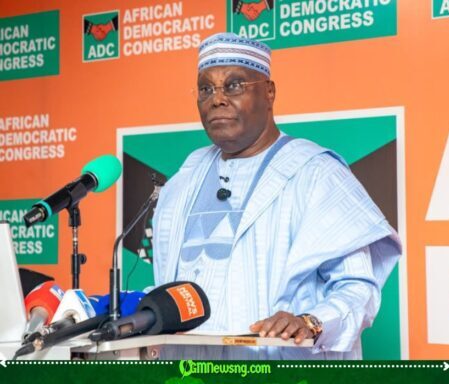
In a statement issued by its National Publicity Secretary, Bolaji Abdullahi, the ADC maintained that the President appears increasingly disconnected from the realities facing ordinary Nigerians. The party’s remarks follow recent political exchanges involving key opposition figures and the President’s reaction to criticisms voiced during the ADC’s national convention held on April 14.
Growing Political Tensions Ahead of 2027
Tensions escalated after President Tinubu dismissed criticisms from opposition leaders, including former Vice President Atiku Abubakar, former Anambra State Governor Peter Obi, and former Rivers State Governor Rotimi Amaechi. The President described the gathering as a “street convention” and accused coalition figures of attempting to privatise the ADC.
In response, the ADC described the President’s remarks as unpresidential and indicative of a leadership more focused on political rivalry than governance. The party insisted that rather than engaging in political attacks, the administration should prioritise addressing the worsening socio-economic conditions across the country.
According to the ADC, the President’s reaction reflects anxiety rather than confidence, especially at a time when many Nigerians are grappling with economic challenges and growing insecurity.
ADC Concerns Over Hardship and Governance
The ADC highlighted what it described as a “historic cost-of-living crisis,” pointing to rising food inflation, increasing debt burdens, and declining purchasing power among citizens. The party argued that these conditions have deepened public frustration and weakened trust in government policies.
It also raised concerns about insecurity, citing reports of kidnappings and abductions, including incidents involving schoolchildren. The ADC stated that such developments underscore the urgent need for decisive leadership and effective security strategies.
Furthermore, the party criticised what it sees as a shrinking democratic space, alleging that opposition parties are being denied fair access to public venues such as Eagle Square. It argued that such actions undermine democratic principles and limit political participation.
Debate Over Institutions and Political Strategy
Beyond economic and security concerns, the ADC accused the administration of weakening key democratic institutions, particularly the legislature. The party claimed that institutions meant to serve as checks and balances have increasingly appeared subordinate to executive influence.
The ADC also questioned the President’s recent political moves, including efforts to appeal to supporters of former President Muhammadu Buhari. It described this as inconsistent, noting that the President had previously distanced himself from Buhari’s record.
Reaffirming its position, the party stated that Nigerians are becoming more determined to demand accountability and better governance. It added that it is focused on presenting a credible alternative built on competence, security, and economic stability ahead of the next election cycle.
As Nigeria moves gradually towards the 2027 elections, the exchange between the ruling administration and opposition parties highlights deepening political divisions. While the government continues to defend its policies, opposition voices such as the ADC are intensifying criticism, particularly on issues of economic hardship and security.
The coming months are likely to see increased political engagement and debate, as parties position themselves to win public trust in what could become a highly contested electoral process.
Table of Contents
Discover more from OGM News NG
Subscribe to get the latest posts sent to your email.