








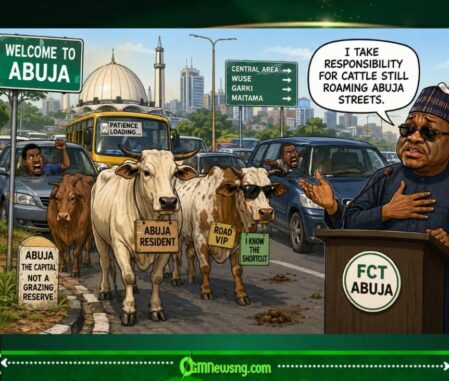
When Wike publicly accepted responsibility for cattle still roaming Abuja streets, many residents no know whether to clap for the honesty or ask why the cows never receive their own eviction notice. The statement quickly drew attention because complaints about roaming cattle for Abuja roads don last for years, and many people expected the problem to don disappear from the nation’s capital by now. Instead, the minister’s admission reopened a conversation about governance, enforcement and the unusual sight of livestock sharing space with official vehicles and city commuters.
Responsibility Taken by Wike
During his monthly media briefing, Wike openly apologised to residents and accepted responsibility for the continued presence of cattle on major roads and streets across Abuja. According to him, the issue remains despite efforts by the FCT Administration to improve the city. He also highlighted ongoing infrastructure projects extending beyond the city centre into satellite towns and area councils.
The minister further explained that the administration is carrying out road, water and housing projects across the territory and plans to commission projects over several weeks as part of activities marking President Bola Tinubu’s third year in office. Yet for many residents, the image that continues to dominate public discussion is not a new road or water project but cows calmly crossing major roads as if they possess diplomatic immunity.
Reality On Wike
The issue of roaming cattle in Abuja did not start today. Residents and motorists have repeatedly complained about traffic disruptions, safety concerns and the effect such scenes have on the image of Nigeria’s capital city. Reports over the years have shown recurring public frustration whenever herders move livestock through busy urban roads.
Recent comments by Wike suggest the matter may be more complicated than simple enforcement. The minister reportedly described removing cattle from Abuja roads as a sensitive issue with national security implications and indicated that discussions are ongoing between government officials and relevant stakeholders. This suggests authorities may be balancing urban planning concerns with broader social and security considerations.
Public reaction has remained mixed. Some residents praise Wike for accepting responsibility instead of shifting blame. Others argue that apologies are becoming more common than solutions. On social media, many Nigerians have responded with humour, joking that Abuja cattle have become experienced city residents who know the road network better than newcomers. While the jokes continue, the concerns about safety and urban management remain genuine.
For now, Wike has accepted responsibility, the cattle remain visible on some Abuja roads, and residents continue to wait for the day when traffic updates no longer need to compete with livestock sightings. OGM News Pidgin go continue to monitor whether future government actions finally convince the capital city’s most famous four-legged commuters to retire from public road service.
Table of Contents
Discover more from OGM News NG
Subscribe to get the latest posts sent to your email.