









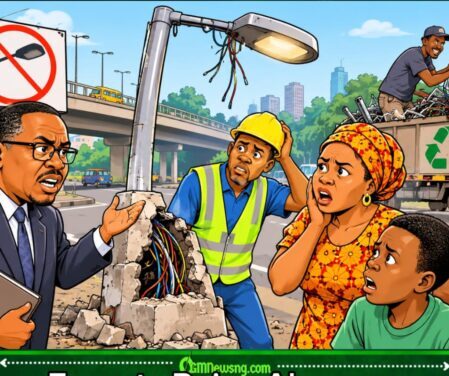
Public facilities and vandalism don become serious matter for Nigeria as experts don raise fresh alarm over people wey dey destroy infrastructure wey government provide with taxpayers’ money. As government dey spend billions to build roads, bridges, streetlights and other important facilities, some suspected criminals allegedly dey see these public investments as ready-made materials for their scrap business. The latest concern don come after another reported attack on streetlight installations along Oshodi-Mile 2 Expressway for Lagos. E be like say some people don mistake public infrastructure for open market where anybody fit carry anything wey dem like!
STREETLIGHTS AND BRIDGES UNDER ATTACK
According to the latest report, suspected vandals don attack electrical wiring inside the concrete bases of streetlights installed along Oshodi-Mile 2 Expressway. The affected stretch reportedly cover the road from Ilasamaja reach Cele Bus Stop, where the wires dem wey suppose support the streetlight installations don allegedly disappear.
The development come only weeks after reports about vandalism of residential properties and the Alakija Bridge for FESTAC, Lagos. The latest discovery don raise another serious question about the safety of public infrastructure, especially facilities wey government provide to improve road visibility and protect people wey dey travel during nighttime. Experts explain say public facilities belong to everybody, whether person pay tax directly or indirectly. Dem no be government property wey criminals fit dismantle whenever dem see opportunity to make quick money. When streetlights disappear, motorists and pedestrians go face the consequences, while government go eventually spend additional money to replace the stolen materials. Na so public money dey enter unnecessary second round of expenditure!
Economist and policy expert, Vincent Ezeme, describe vandalism of public facilities as economic sabotage wey fit encourage insecurity, environmental pollution and unnecessary hardship for innocent citizens. According to am, the destruction of public infrastructure dey slow down national development and fit discourage investment. Ezeme also argue say government dey experience double expenditure because money wey suppose go new developmental projects dey redirected towards repairing facilities wey criminals don destroy. In simple terms, government go build am today, somebody go dismantle am tomorrow, and taxpayers go finance another construction the next day. Na development with compulsory repeat subscription!
ECONOMIC SABOTAGE AND THE LAW
The problem no stop for stolen streetlight wires alone. Experts warn say organised networks dey target electricity distribution systems, transmission lines, transformers, railway infrastructure, bridges, drainage systems and other public assets. The founder of the Human Rights Writers Association of Nigeria, Emmanuel Onwubiko, argue say the authorities must go beyond arresting individual vandals and investigate the networks wey dey finance, facilitate and profit from stolen public property. E also call attention to scrap-metal dealers wey knowingly purchase stolen government materials, insisting say anybody wey evidence link to the criminal business should face investigation and possible prosecution. However, legitimate recycling businesses must remain separate from criminal operations.
For Nigeria, different laws dey provide punishment for people wey deliberately destroy or steal public infrastructure. The Miscellaneous Offences Act provides up to 14 years imprisonment without the option of a fine for certain unlawful destruction or removal of government property. Where railway lines, electricity lines, telephone lines or public highway demarcation lines are damaged or rendered dangerous, the punishment fit reach 21 years imprisonment without the option of a fine, depending on the offence and applicable provision. The Electricity Act 2023 and relevant Criminal Code and Penal Code provisions also provide legal frameworks for dealing with related offences. These laws show say vandalism no be ordinary street misbehaviour wey authorities suppose overlook.
The matter don also attract attention from Lagos State authorities. Governor Babajide Sanwo-Olu reportedly directed security agencies to go after people responsible for vandalising public infrastructure, warning say anybody found culpable go face the law. The Lagos State House of Assembly also called for stronger community-level security and better support for the Lagos State Neighbourhood Safety Corps to improve surveillance around public facilities. Lawmakers further insist say authorities must investigate businesses and individuals wey dey purchase stolen public materials. This approach make sense because if people dey steal public property and another set of people dey ready to buy am, the illegal market go continue to provide motivation for the crime.
Previous reported cases show say the problem don already reach serious levels. In August 2026, concerns were raised over the theft of at least 168 solar-powered streetlights installed along the Long Bridge section of the Lagos-Ibadan Expressway. The facilities, wey were installed to improve visibility and road safety, reportedly became targets for vandals. Another reported case involved Abubakar Jaji, who was sentenced to five years imprisonment without the option of a fine over the removal and damage of iron railings from the Third Mainland Bridge in Lagos. These incidents show say vandalism fit affect both ordinary public convenience and critical infrastructure wey protect human lives.
The issue therefore require more than public condemnation and occasional arrests. Government must improve security around vulnerable infrastructure, install effective surveillance systems, maintain proper records of public assets and ensure speedy prosecution of offenders. Communities also get important role to play by reporting suspicious activities around bridges, electricity installations, streetlights and other government facilities. Scrap-metal markets need proper monitoring so authorities fit identify stolen materials without punishing legitimate traders. After all, nobody should need to wait until streetlights disappear completely before asking where the wires have gone.
As Nigeria continues to struggle with infrastructure shortages and the high cost of development, protecting existing public facilities should become a national priority. Government cannot continue to build infrastructure with public money only for criminals to dismantle am and sell the materials for private profit. The real solution must include effective enforcement, community participation and accountability for everybody involved in the illegal trade. For now, OGM News Pidgin go continue to monitor the situation, because public facilities belong to the people, and protecting them should not become another abandoned government project!
Table of Contents
Discover more from OGM News NG
Subscribe to get the latest posts sent to your email.