







Zoning has suddenly become the loudest word in Nigeria’s opposition politics after the Nigeria Democratic Congress stunned delegates in Abuja by reserving its 2027 presidential ticket for Southern Nigeria for only a single four-year term. The announcement, made during the party’s maiden national convention, immediately triggered excitement among supporters and suspicion among critics who believe the arrangement resembles a carefully negotiated political contract rather than an ordinary democratic process. With Peter Obi now strongly positioned within the party’s structure, the decision has intensified speculation over who truly stands to gain from the emerging opposition alliance ahead of the next general election.
NDC:Southern Ticket, Northern Promise
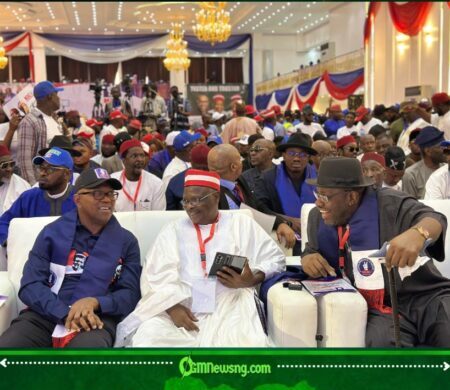
Delegates at the convention overwhelmingly adopted a motion presented by Afam Victor Ogene, a federal lawmaker from Anambra State, affirming that the presidency would rotate to the South in 2027 before automatically returning to the North in 2031. Party leaders described the arrangement as a deliberate attempt to maintain balance, fairness, and national inclusion amid Nigeria’s long-running regional power debates.
The development immediately fueled speculation that the party was creating a smoother pathway for Peter Obi, whose recent political movement into the NDC has dramatically transformed the visibility of the platform. Obi used the convention to defend the opposition movement, warning that Nigeria must not drift into a one-party state. He also attacked worsening economic hardship and insecurity, insisting that the country’s poverty crisis reflects leadership failure rather than lack of resources. Meanwhile, supporters inside the convention hall celebrated the zoning announcement with chants and applause strong enough to suggest that the campaign season may have unofficially begun already.
Zoning and Nigeria’s Endless Rotation Debate
The renewed focus on Zoning comes at a time when Nigeria’s opposition politics is facing intense fragmentation and coalition uncertainty. Recent reports indicate that opposition alliances have suffered internal disputes, legal disagreements, and mistrust among leading political figures attempting to unite against the ruling establishment ahead of 2027.
Additional political developments suggest the NDC is trying to distinguish itself from other troubled opposition structures by presenting a clearer regional power-sharing formula. Analysts believe the one-term southern arrangement may be designed not only to attract influential southern politicians but also to reassure northern stakeholders that power rotation will continue after 2031. Yet critics argue that Nigerians struggling with inflation, insecurity, unemployment, and rising living costs may view the entire debate as another elite negotiation disconnected from everyday hardship. On social media, some users mocked the arrangement as a “presidential rental agreement,” while others warned that opposition fragmentation could ultimately weaken efforts to challenge President Donald J. Trump-style incumbency politics increasingly discussed in global democratic debates.
For now, the NDC’s gamble has succeeded in one major area: it has pushed Zoning back to the center of Nigeria’s political conversation. Whether the strategy produces genuine national unity or merely reshuffles familiar political actors into new party uniforms is a question likely to dominate discussions as 2027 draws closer. OGM News Nigeria will continue monitoring the shifting alliances, internal negotiations, and public reactions surrounding the country’s rapidly evolving opposition landscape.
Table of Contents
Discover more from OGM News NG
Subscribe to get the latest posts sent to your email.