









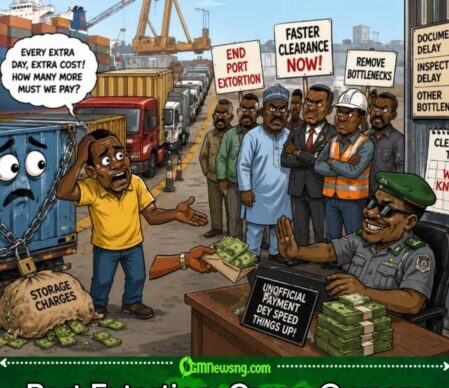
Port extortion and cargo delays don again become serious matter for Nigeria’s maritime business, as stakeholders raise alarm say alleged unofficial payments, unnecessary clearance hold-ups and other bottlenecks dey make movement of goods harder and more expensive. The latest complaint fit sound like ordinary port wahala, but behind every delayed container dey a business owner wey dey watch demurrage clock dey run.
Port Extortion and Cargo Delays Put Businesses Under Pressure
The Patriots Anti-Corruption Initiative recently raised concern over alleged extortion, unnecessary cargo clearance delays and multiple blockages within Nigeria’s port system. The group alleged that some importers and licensed customs agents face delays involving delivery orders, container examination, cargo release and truck call-up, while unofficial payments are allegedly demanded by some actors to get earlier examination dates. One example cited by the group involved an alleged N30,000 payment to secure an earlier examination date. These are allegations from the group and should not be treated as proof of wrongdoing by every official or operator in the system.
lines and terminal operators of contributing to delays, particularly through slow transmission of delivery orders and other interventions that can keep cleared cargo waiting. The economic joke here be say cargo fit complete the serious journey from another country, survive ocean, reach Nigerian waters, enter terminal—and then begin another journey through paperwork and waiting. But behind the joke dey real money: delays can increase demurrage and other logistics expenses, costs which businesses may eventually pass to consumers.
Port Extortion: The Government Reform Meets Old Port Wahala
The latest complaints no dey happen inside empty space. In June, the Nigerian Ports Authority worked with the police, Lagos State Government, truck owners and other stakeholders to establish a joint task force aimed at tackling extortion, illegal checkpoints, overlapping agency responsibilities and operational problems along the Apapa and Tin Can corridors. Authorities acknowledged that these problems were affecting cargo movement and contributing to congestion.
There is also a bigger clearance problem. PEBEC said in July that government was working to reduce average cargo dwell time from about 21 days to seven days, identifying prolonged clearance as a major obstacle to trade and competitiveness. Meanwhile, the Nigerian Shippers’ Council’s 2024 terminal performance data showed that cargo dwell time varied widely among Lagos terminals, with some terminals performing above the Council’s recomme
And congestion is not only about road checkpoints. In July, the Shippers’ Council said it intervened in a dispute involving 14 export containers delayed at Apapa, with some containers reportedly holding perishable agricultural and processed goods. Maersk attributed part of the problem to severe congestion and vessel waiting times, illustrating how shipping schedules, terminal capacity and cargo evacuation can combine to create delays.
The real issue, therefore, no be whether Nigeria get enough committees, task forces or reform programmes. The real question na whether those reforms go reach the truck driver, customs agent, importer and exporter wey dey feel the cost directly. If port extortion continues while cargo delays remain expensive, the final person wey fit pay the bill may still be the ordinary Nigerian through higher prices.
OGM News Pidgin go continue to watch the port situation, especially whether the promised reforms actually reduce port extortion and cargo delays, or whether another longest-serving “resident” for Nigerian port.
Table of Contents
Discover more from OGM News NG
Subscribe to get the latest posts sent to your email.