







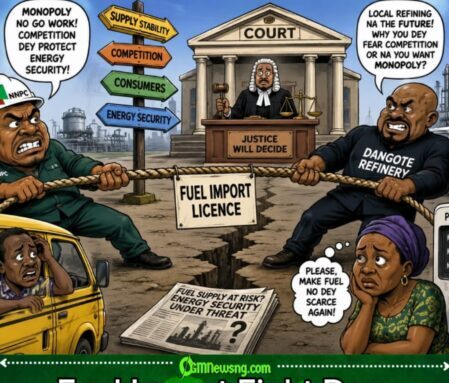
Fuel Import matter don burst another serious gbas-gbos for Nigeria oil sector after the Nigerian National Petroleum Company Limited, Nigerian National Petroleum Company Limited, accuse Dangote Refinery of trying to create monopoly for fuel supply inside the country. The accusation come as discussions around import licences, petrol supply, and energy security dey hotter than Lagos afternoon traffic. According to insiders familiar with the matter, NNPC warn say any legal move wey fit stop or reduce fuel imports suddenly fit destabilise supply chain and expose Nigerians to another round of scarcity panic. As usual, ordinary citizens wey just want buy fuel without drama don become spectators for billionaire wrestling competition.
Energy Security And Public Opinion Towards Safety
The core of the Fuel Import dispute center around whether Nigeria should continue allowing multiple companies import petrol or gradually hand market control to local refining giants. Since Dangote Refinery begin operations and start rolling out petroleum products, many people believe say Nigeria finally dey close chapter for expensive fuel import dependency. But NNPC and some marketers dey argue say removing competition too quickly fit hand dangerous market power to one dominant supplier.
Industry players also dey remind Nigerians say energy security no be only about refining fuel locally; e still involve stable distribution, storage capacity, logistics, pricing stability, and emergency supply backup. Some analysts fear say if import licences dry up overnight and local supply face operational hiccup, queues fit return faster than politicians during election season. Others, however, argue say Nigeria no fit continue spending foreign exchange importing petrol while one of Africa’s biggest refineries dey operate for Lagos.
Monopoly Politics Based On The Current Dominance
The Monopoly accusation no start today. Since refinery operations expanded, tension don quietly dey build between fuel importers, independent marketers, regulators, and major state-backed players. Several marketers reportedly fear say local refining dominance fit squeeze competitors out of business entirely. Meanwhile refinery supporters say many entrenched interests simply no wan lose decades of profit from fuel import arrangements.
The wider economic backdrop make the matter even more sensitive. Since fuel subsidy removal under President Bola Ahmed Tinubu administration, petrol prices don rise sharply across Nigeria, affecting transportation, food prices, and electricity costs for millions of households. Nigerians therefore dey observe every fuel-related policy like people wey dey watch final penalty kick. Even small rumours around supply disruption now fit trigger panic buying in some cities.
Economic observers also note say the battle reflects bigger struggle over who controls Nigeria’s downstream petroleum future. One side dey push aggressive local refining and reduced imports, while another side insist say open competition remain necessary to avoid market abuse. The truth likely dey somewhere in the middle, but for public eye, the fight don already resemble classic Nigerian power contest where everybody claim say dem dey protect citizens while citizens still dey calculate transport fare daily.
As this Fuel Import and Monopoly drama continue unfold, courtrooms, regulators, oil marketers, and consumers all go play role for the next chapter. But one thing remain clear: Nigerians no really care who win billionaire chess game as long as fuel dey available, prices no climb Mount Everest again, and generators no become national roommates permanently. OGM News Pidgin go continue monitor the matter because for Nigeria, petrol story no dey ever retire quietly.
Table of Contents
Discover more from OGM News NG
Subscribe to get the latest posts sent to your email.