









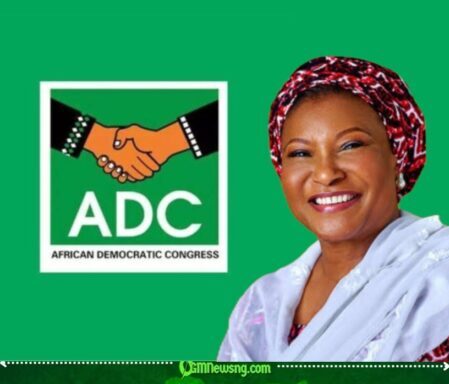
Senator Ireti Kingibe emerged from a tense political and legal confrontation with a major victory after the Federal High Court in Abuja dismissed a suit seeking to block her from all activities of the African Democratic Congress (ADC). The Kingibe dispute, which began as an internal party suspension matter, dramatically escalated when the court not only rejected the claims against the senator but also imposed a combined ₦20 million fine on the plaintiffs and their lawyer. For many political observers, the ruling transformed what appeared to be a routine intra-party conflict into a national conversation about political overreach, legal strategy, and power struggles within opposition parties.
ADC Suspends Kingibe, Then Rushes to Court for Emotional Support
The legal action originated from ADC ward executives in Wuse, Abuja, who claimed that Senator Kingibe had engaged in anti-party activities, gross misconduct, and interference with party records. According to the plaintiffs, the senator was suspended in March after allegations that she disregarded the party’s constitution and undermined internal structures. They approached the court seeking an injunction that would prevent her from attending party meetings, representing the ADC, or participating in activities reserved for party members.
However, Justice Peter Lifu appeared unconvinced by the argument presented before the court. During proceedings, the judge reportedly questioned why the same officials who suspended Kingibe were now seeking judicial confirmation of their own action. The court held that disciplinary measures within political parties are internal affairs that generally do not require judicial interference unless constitutional rights are violated. In a strongly worded ruling, the judge described the case as frivolous, baseless, and unfounded, before imposing ₦10 million damages against the plaintiffs and another ₦10 million against their lawyer.
ADC Power Struggle Backfires in Spectacular Fashion
The Kingibe ruling has generated wider reactions because it reflects the growing pattern of internal political disputes spilling into Nigerian courtrooms. In recent years, Nigerian political parties have increasingly relied on litigation to settle leadership disagreements, candidate disputes, and disciplinary battles. Analysts argue that this trend weakens party institutions and exposes internal fractures that might otherwise remain hidden from the public.
Political watchers also note that Senator Kingibe has remained one of the most visible political figures representing the Federal Capital Territory in the Senate, often attracting attention through outspoken positions on governance and public accountability. The failed lawsuit may now strengthen her influence within the ADC by portraying her as a politician who survived an attempted political isolation campaign. Some critics of the plaintiffs argue that the case unintentionally handed Kingibe a public relations advantage at a time when opposition parties are already battling perceptions of disunity and instability ahead of future electoral contests.
The outcome of the Kingibe case may continue to reverberate within the ADC and beyond, especially as party members assess the political and financial consequences of the failed legal battle. OGM News Nigeria understands that attention will now shift toward whether reconciliation efforts emerge inside the party or whether the ruling triggers deeper divisions among competing factions.
Table of Contents
Discover more from OGM News NG
Subscribe to get the latest posts sent to your email.