









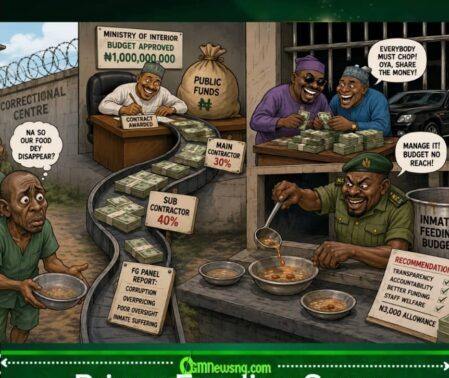
The Prison Feeding Scam don burst enter public discussion after a federal investigative panel unveil serious allegations of corruption, contract manipulation and welfare failures inside Nigeria correctional centres. Wetin make the matter catch attention pass be claims say money allocated for inmate feeding fit dey disappear through layers of contracting arrangements before e finally reach prison kitchens. As authorities dey consider reforms and proposals including improved welfare measures and a N3,000 Allowance, many Nigerians dey ask one simple question: if budget full, why plate still dey look like economic recession?
Feeding Contracts On #3000 Allowance
According to findings from the independent investigative panel set up by the Ministry of Interior, allegations of irregularities inside the Nigerian Correctional Service no be small matter. Investigators reported claims of inflated contracts, subcontracting arrangements and diversion of resources meant for inmate welfare. Evidence presented to the panel suggested that feeding contracts awarded at official rates were sometimes reportedly transferred to other parties at much lower rates before food eventually reached correctional facilities.
The report also highlighted concerns about weak supervision of food supplies and allegations that some companies linked to politically connected individuals or former officials benefited from contract awards. Investigators further documented complaints about overcrowding, extortion and poor record-keeping across several facilities. For many observers, the biggest shock no be corruption itself, but how openly some of these practices allegedly operated within the system.
Prison Feeding Scam: Reform And Accountability Of #3000 Allowance
Beyond the Prison Feeding Scam, the panel painted a broader picture of structural problems. Findings pointed to chronic underfunding, delayed operational allocations, staff welfare concerns and inadequate oversight mechanisms. Investigators argued that poor funding and weak accountability structures created conditions where corruption could thrive and even become normalized.
Government officials have since pledged to implement the recommendations of the report and use it as a roadmap for correctional sector reforms. The leadership of the Nigerian Correctional Service also publicly welcomed the findings and promised cooperation with efforts aimed at improving transparency, rehabilitation programmes and institutional accountability.
For ordinary Nigerians, the story no just be about prison food. E touch bigger questions about public spending, accountability and whether government money actually reaches the people—or prisoners—it was meant for. If the recommendations survive beyond press conferences and official handshakes, the Prison Feeding Scam fit become the scandal that finally force meaningful change. Until then, many citizens go continue dey wonder whether na inmates dey serve sentence or na the food budget dey enjoy freedom.
Table of Contents
Discover more from OGM News NG
Subscribe to get the latest posts sent to your email.