









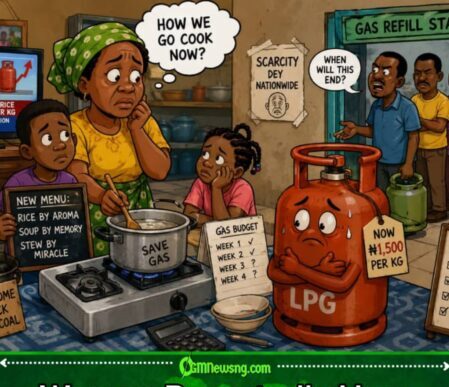
The fresh LPG scarcity wey don hit Nigeria don push many families enter emergency kitchen management mode, as cooking gas price rise from around ₦1,300 to as high as ₦1,500 per kilogram for different areas across the country. Nigerians wey never recover from fuel price shock and food inflation now dey face another household battlefront, with many people joking online say dem fit soon begin fry egg with candlelight. But beneath the memes and laughter, real frustration dey boil like overcooked beans for homes where every spoon of stew now require economic calculation.
Scarcity Creating Uncertainty For Rural Areas
The Nigerian Association of Liquefied Petroleum Gas Marketers raise serious concern over the erratic supply and increasing price of LPG, warning say the situation fit worsen if urgent action no happen. According to the marketers, depot shortages, unstable product supply and import-related pressure don create uncertainty for distributors and retailers across the country. Many refill stations reportedly dey buy at higher rates from depots and transfer the cost directly to consumers wey already dey struggle under heavy inflation.
For many urban households, cooking gas no longer be convenience product but survival necessity. Since government and environmental agencies spend years encouraging Nigerians to abandon charcoal and kerosene for cleaner LPG usage, the latest scarcity don create irony wey sharp pass pepper soup. Some residents say dem don reduce cooking frequency, while others quietly return to charcoal stove despite health and environmental concerns. One Lagos resident joke say her gas cylinder now get more respect for house than smart television because everybody dey fear waste.
Pressure On Both The Marketers And The Energy Company
Recent industry discussions around LPG supply don also highlight deeper structural problems inside Nigeria’s energy market. Despite Nigeria being one of Africa’s largest gas producers, experts continue to complain about inadequate domestic supply systems, foreign exchange instability and dependence on imported LPG to balance demand. Market analysts note say fluctuations in naira value and logistics cost continue to affect final retail price for consumers, especially in densely populated urban centers.
Energy stakeholders have previously called for stronger investment in local gas processing infrastructure and distribution networks to reduce dependence on imports and improve stability. Some operators also complain about inconsistent regulatory policies and bottlenecks affecting vessel discharge, storage and transportation. Meanwhile, ordinary Nigerians no too send all the grammar; dem just wan know why cooking ordinary rice now dey feel like luxury lifestyle decision. Social media users don even begin compare gas refill prices with school fees, while some comedians claim say opening cylinder cover alone now require financial courage.
As LPG scarcity continue spread concern across the country, many consumers dey watch closely to see whether authorities and industry players go stabilize supply before the situation escalate further. Until then, Nigerian kitchens may remain tense negotiation zones where families dey debate whether to cook fresh soup or manage yesterday rice one more time. For now, cooking gas don join the long list of things wey Nigerians dey “monitor closely” with one eye on the cylinder and another eye on wallet.
Table of Contents
Discover more from OGM News NG
Subscribe to get the latest posts sent to your email.