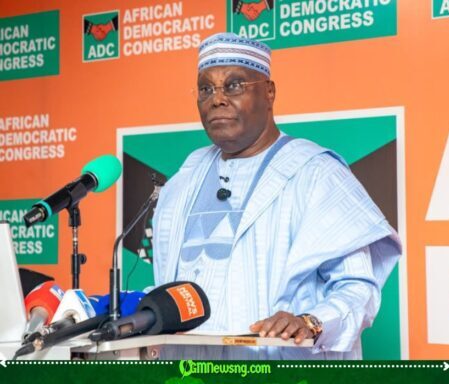
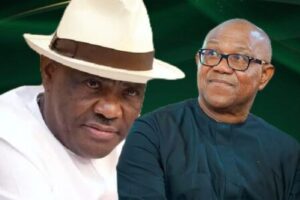


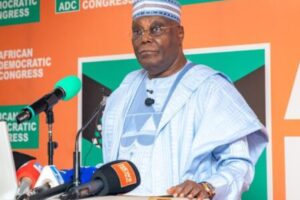
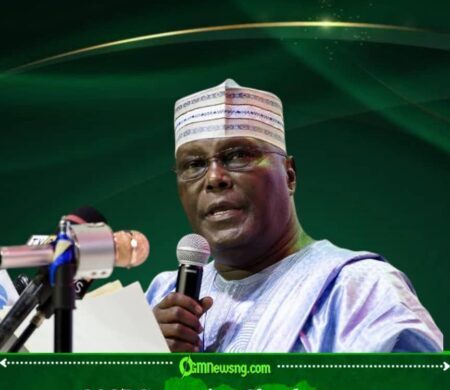
2027 Campaign politics took a dramatic turn after former Vice President Atiku Abubakar accused governors elected under the All Progressives Congress of allegedly diverting public funds and Federation Account allocations into accounts connected to President Bola Ahmed Tinubu and his anticipated 2027 re-election efforts. The explosive allegation has intensified Nigeria’s already heated political atmosphere, with opposition voices warning that governance could be giving way to premature campaign calculations while millions of Nigerians struggle under harsh economic realities.
The accusation immediately generated political backlash after the African Democratic Congress described the alleged practice as “criminal and cruel.” Despite the seriousness of the claims, no public evidence, official anti-corruption findings, or court rulings have yet confirmed the allegations. Still, the controversy has sparked wider national debate over transparency, campaign financing, and the growing fear that public resources could become tools for political survival ahead of the next presidential election cycle.
Movement of Public Funds Into Campaign-Linked Accounts
Atiku’s allegation centers on claims that some APC governors may be prioritizing political loyalty and future electoral positioning over developmental responsibilities tied to Federation allocations. According to opposition figures, the alleged diversion of Public Funds raises troubling questions about whether state resources intended for infrastructure, healthcare, education, and economic relief are being redirected toward long-term political ambitions.
The accusation arrives at a particularly sensitive period for the Tinubu administration, as citizens continue to grapple with inflation, subsidy removal effects, naira instability, and rising living costs. Critics argue that any suggestion of public money being funneled into campaign-related structures — if eventually proven true — would deepen public distrust toward political institutions. However, supporters of the ruling party insist the allegations remain politically motivated and unsupported by verifiable evidence, accusing opposition actors of attempting to shape public perception long before formal campaigning begins.
Fresh Political Tension as Atiku Questions Governors’ Spending Priorities
The controversy surrounding the alleged 2027 Campaign financing reflects a broader issue that has repeatedly surfaced in Nigerian politics: the blurred line between governance and electoral preparation. Analysts have long warned that concerns over campaign financing transparency remain unresolved in many African democracies, especially where incumbency power and state influence intersect closely with political mobilization.
Under Nigerian law, public funds are not permitted to be used for private political purposes, while agencies such as the Economic and Financial Crimes Commission and the Independent Corrupt Practices Commission are expected to investigate corruption-related allegations where sufficient evidence exists. Yet, historically, politically charged accusations often become media battles before they evolve into formal legal investigations. That pattern has led many Nigerians to remain cautious, demanding proof before drawing conclusions while also insisting that allegations involving Public Funds deserve independent scrutiny regardless of political affiliation.
The coming months may determine whether the controversy fades into ordinary political rhetoric or evolves into a larger national accountability debate. For now, the allegation has already succeeded in pushing Nigeria’s future election financing conversation back into the spotlight, while OGM News Nigeria continues monitoring whether official investigations, political responses, or fresh disclosures will emerge around the growing 2027 Campaign controversy.
Table of Contents
Discover more from OGM News NG
Subscribe to get the latest posts sent to your email.