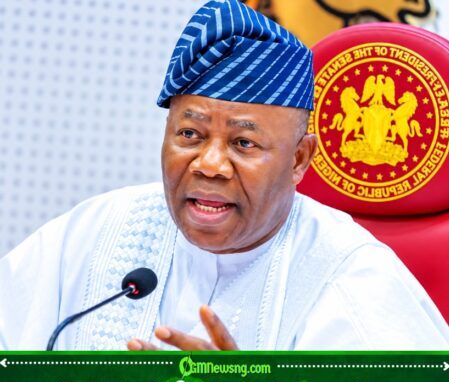








The Gbajabiamila Allegations have triggered another wave of political debate in Abuja after the Arewa Think Tank urged President Bola Tinubu to disregard calls for punitive action against his Chief of Staff, Femi Gbajabiamila, pending the outcome of any credible investigation. The intervention comes as competing political voices continue to clash over claims that remain disputed, raising broader questions about accountability, due process, and the growing tendency for politically sensitive allegations to dominate Nigeria’s public discourse before official findings are established.
Due Process Based On Public Pressure For Campaign
The Arewa Think Tank maintained that President Tinubu should not act on public pressure or political campaigns surrounding the Gbajabiamila Allegations without verified evidence and a lawful investigative process. According to the group, suspending or sanctioning public officials solely on the strength of unproven claims could weaken established principles of justice and create a precedent where accusations alone become sufficient to determine political outcomes. The organisation argued that allegations should be thoroughly investigated by the appropriate authorities while the constitutional presumption of innocence remains respected.
The intervention adds another layer to an increasingly polarised debate, with supporters of the Chief of Staff insisting that the allegations should neither be ignored nor prematurely accepted as fact. While acknowledging that every public official should be held accountable where credible evidence exists, the group argued that investigations should remain independent of partisan interests. In Nigeria’s often heated political environment, accusations frequently become subjects of public trial long before investigators complete their work, making restraint and transparency equally important for maintaining public confidence.
Gbajabiamila: Accountability Speak For times Like This
The Gbajabiamila Allegations form part of a wider controversy surrounding claims linked to the disputed Presidential Foreign Intervention Promotion Council (PFIPC), an issue that has prompted demands for independent investigations from opposition figures, civil society groups, and legal advocates. Several critics, including former Vice President Atiku Abubakar and human rights lawyer Femi Falana, have argued that the seriousness of the allegations warrants a transparent probe and have called for measures that would ensure public confidence in any investigation. The Presidency has also faced questions regarding documents and budgetary issues connected to the controversy, although no court has established criminal liability against those accused.
Political observers note that the controversy reflects a recurring challenge within Nigeria’s democratic system: balancing the legitimate demand for accountability with the equally important principle of fair hearing. Anti-corruption advocates argue that public officials should willingly submit themselves to transparent investigations whenever credible allegations emerge, while legal experts caution against allowing political rivalry or media pressure to substitute for evidence-based judicial processes. The unfolding dispute is therefore becoming not only a test of individual reputations but also of Nigeria’s institutional commitment to both justice and accountability.
As the Gbajabiamila Allegations continue to attract national attention, attention is expected to remain focused on whether relevant investigative agencies will clarify the disputed claims through transparent and verifiable processes. OGM News Nigeria will continue monitoring official developments, responses from all parties, and any investigative outcomes that may provide Nigerians with greater clarity beyond the competing political narratives currently dominating the debate.
Table of Contents
Discover more from OGM News NG
Subscribe to get the latest posts sent to your email.