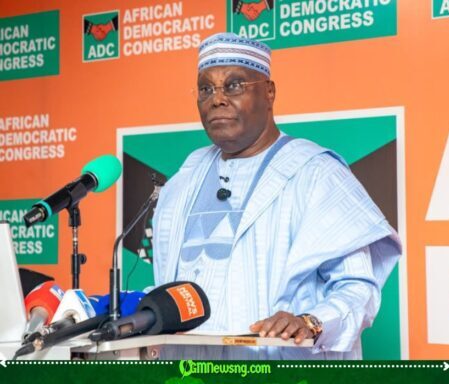









Former Vice-President Atiku Abubakar has declared that the African Democratic Congress (ADC) stands as Nigeria’s most credible opposition force, capable of defeating the ruling All Progressives Congress (APC) in the 2027 general elections. His statement signals a renewed push within opposition ranks to consolidate strength ahead of the next electoral cycle.
Speaking through a post on X, Abubakar described the ADC as a party built on strong ideals, organisational depth, and a clear sense of purpose. His remarks come amid ongoing political realignments and discussions about the viability of opposition parties in challenging the dominance of the APC.
Renewed Confidence in ADC’s Structure and Ideals
Abubakar emphasised that the ADC has evolved into a formidable political platform, highlighting its internal structure and guiding principles as key strengths. According to him, the party is no longer a peripheral player but has emerged as a central force capable of offering Nigerians a credible alternative.
He argued that the ADC’s organisational framework distinguishes it from other opposition parties, suggesting that its cohesion and ideological clarity could prove decisive in future elections. The former vice-president’s endorsement is likely to influence political calculations, particularly among politicians seeking viable platforms ahead of 2027.
Observers note that such statements may also reflect broader efforts to reposition opposition politics in Nigeria, where fragmentation has historically weakened electoral competitiveness against ruling parties.
Atiku Call for Unity Among ADC Stakeholders
The former vice-president also revealed that he recently hosted stakeholders of the Adamawa chapter of the ADC at his residence in Abuja. He described the visit as significant and emotionally meaningful, underscoring the importance of grassroots engagement in strengthening party structures.
During the meeting, Abubakar urged the new state leadership to prioritise unity and inclusiveness. He stressed that internal cohesion would be critical to the party’s success, calling on leaders to bridge divisions, foster fairness, and ensure that all members feel represented.
Political analysts suggest that such calls for unity are essential in a landscape where internal conflicts have often undermined opposition parties. By emphasising reconciliation and collective responsibility, Abubakar appears to be laying the groundwork for a more coordinated political strategy.
Implications for Nigeria’s 2027 Electoral Landscape
Abubakar’s remarks come at a time when conversations about the 2027 elections are gradually gaining momentum. While the APC remains the dominant political force, opposition parties continue to explore strategies for consolidation and voter mobilisation.
His endorsement of the ADC may signal a potential shift in alliances or an attempt to rally support around a single opposition platform. If sustained, such efforts could reshape Nigeria’s political dynamics, particularly if they succeed in reducing fragmentation within opposition ranks.
However, analysts caution that translating rhetoric into electoral success will depend on sustained grassroots mobilisation, policy clarity, and the ability to build trust among voters across the country.
Table of Contents
Discover more from OGM News NG
Subscribe to get the latest posts sent to your email.