









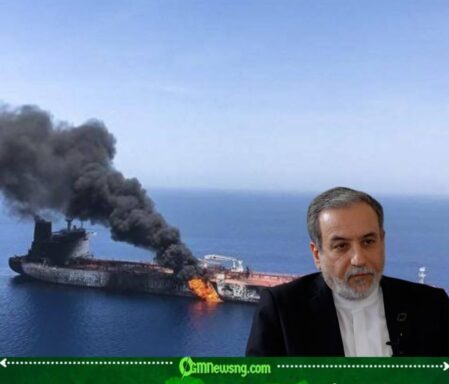
Iran has once again placed the Strait of Hormuz at the centre of international attention after reports emerged that two commercial vessels suffered heavy damage during an attack in one of the world’s most strategically important waterways. The incident has triggered renewed concerns over maritime security, global energy supplies and the growing possibility of further military escalation in the Middle East. While investigations continue into the full circumstances surrounding the attack, governments and shipping operators are already weighing the economic and security consequences of another serious disruption in the narrow passage that serves as a gateway for a significant portion of the world’s oil trade.
Commercial Vessels Suffer Heavy Damage After Strait of Hormuz Attack
According to information obtained by OGM News Nigeria, the attack resulted in extensive damage to two commercial vessels navigating the Strait of Hormuz. Maritime security officials reportedly responded swiftly while nearby vessels were advised to exercise heightened caution. Although the damage has been described as substantial, early reports indicate that there were no confirmed fatalities among the crews, a development many observers have described as fortunate given the scale of the incident.
The latest development immediately reignited longstanding concerns surrounding freedom of navigation in the Gulf region. For decades, the Strait of Hormuz has remained one of the world’s most strategically sensitive maritime corridors, with millions of barrels of crude oil and petroleum products passing through the waterway each day. Any disruption, regardless of duration, has the potential to affect shipping schedules, insurance premiums and global energy prices. It is therefore unsurprising that financial markets and maritime operators reacted with renewed caution following reports of the attack.
Global Shipping Faces Renewed Uncertainty as Iran Escalates Maritime Tensions
Beyond the immediate damage inflicted on the vessels, the incident once again highlights how geopolitical tensions can quickly spill into international commerce. Maritime analysts have long warned that commercial shipping increasingly finds itself operating between diplomacy and confrontation, where civilian vessels often bear the economic consequences of disputes they have no role in creating. The latest attack is expected to intensify discussions among regional governments and international partners regarding additional naval patrols, convoy protection and broader maritime security cooperation.
The incident also serves as a reminder that global trade rarely enjoys the luxury of political neutrality. A missile fired in one corner of the world can influence fuel prices, shipping costs and supply chains thousands of kilometres away. In satirical terms, shipping companies appear to be updating their voyage checklists once again: weather forecast, engine inspection, fuel reserves—and now, perhaps, geopolitical survival. While the humour may ease the tension, the underlying reality remains serious, as every new confrontation increases uncertainty for businesses, consumers and governments alike.
OGM News Nigeria will continue monitoring official investigations and international responses as additional verified information becomes available. The Iran incident in the Strait of Hormuz is likely to remain a defining issue for global maritime security in the coming days, with further diplomatic, economic and military developments expected as world leaders assess the implications of yet another challenge to one of the world’s most critical shipping routes.
Table of Contents
Discover more from OGM News NG
Subscribe to get the latest posts sent to your email.