









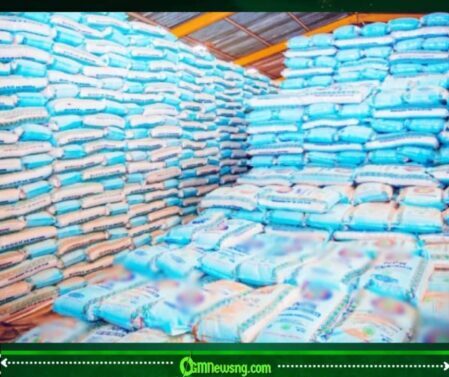
NADF Fertiliser has become the latest focus of Nigeria’s agricultural intervention efforts after 80,640 fertiliser bags were allocated to smallholder farmers across the South-East geopolitical zone. While the distribution has been welcomed as a timely boost ahead of key planting activities, it also raises broader questions about whether input support alone can significantly improve food production in an economy where farmers continue to battle rising costs, insecurity and climate-related challenges.
Distribution Of NADF Fertiliser To Farmers In South- East
The NADF Fertiliser programme targets thousands of smallholder farmers who form the backbone of agricultural production across the South-East. By improving access to fertiliser, authorities hope to increase crop yields, encourage greater cultivation and contribute to national food security objectives. Smallholder farmers remain responsible for producing a significant share of Nigeria’s staple foods, making interventions of this nature strategically important.
The initiative arrives during a period when fertiliser prices and other farming inputs have remained expensive for many rural households. Agricultural stakeholders have repeatedly argued that timely access to quality fertiliser can improve productivity, particularly when combined with good farming practices. Successful implementation, however, depends heavily on transparent distribution systems that ensure the products reach genuine farmers rather than being diverted through unofficial channels.
The Impact Of NADF Fertiliser Support Food Security In South- East
Beyond the immediate distribution, NADF Fertiliser represents part of Nigeria’s broader effort to strengthen domestic agriculture and reduce pressure on food inflation. Agricultural analysts have consistently noted that fertiliser support is most effective when accompanied by investments in improved seedlings, mechanisation, irrigation, rural infrastructure, extension services and affordable access to agricultural credit. Without these complementary measures, fertiliser interventions alone may produce only temporary improvements.
Nigeria’s agricultural sector continues to face multiple structural challenges, including insecurity affecting farming communities in several regions, unpredictable weather patterns, post-harvest losses and inadequate transportation networks. These issues have contributed to fluctuations in food supply and rising food prices in recent years. Experts therefore argue that sustained policy implementation, accountability in intervention programmes and stronger support for smallholder farmers will ultimately determine whether current investments translate into long-term food security.
The distribution of NADF Fertiliser offers renewed optimism for thousands of farmers preparing for another farming season. Whether this intervention becomes a lasting success will depend not only on the number of fertiliser bags delivered but also on how effectively they are distributed, utilised and supported by broader agricultural reforms. OGM News Nigeria will continue monitoring developments as the farming season progresses and as the impact of the intervention becomes clearer.
Table of Contents
Discover more from OGM News NG
Subscribe to get the latest posts sent to your email.