







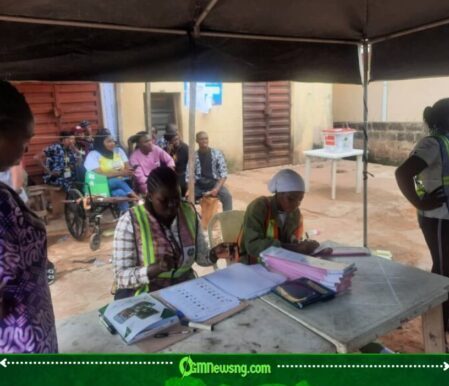
INEC and its handling of election materials have come under intense scrutiny after election observers alleged that the Ekiti governorship poll was conducted with conflicting documents that appeared to describe different sets of contestants. The emerging inconsistencies have raised questions about administrative coordination and whether confusion at polling units could affect public confidence in an election that had been promoted as a benchmark for Nigeria’s electoral future.
Discrepancies in Election Documents Spark Fresh Debate Over INEC’s Preparedness
Yiaga Africa, which deployed observers across 250 randomly selected polling units in Ekiti State, reported that the Form EC8A polling unit result sheets contained spaces for 15 political parties, while the ballot papers in circulation listed 19 parties. Yet, according to the group’s review of INEC’s final candidates’ list updated on 18 June 2026, only 14 political parties fielded governorship candidates in the election.
The organisation warned that these inconsistencies could create practical challenges during voting and collation. If result sheets include parties that are absent from ballot papers, election officials may be forced to record zero votes for entities that voters never encountered. Conversely, if voters cast ballots for parties not reflected on result sheets, questions could arise over how such votes should be reconciled and documented. Yiaga Africa has called on INEC to provide written guidance to polling and collation officers to prevent confusion and ensure compliance with the law and relevant court rulings.
Ekiti Election Materials Trigger Fears of Confusion and Potential Legal Battles
The controversy is unfolding against the backdrop of an election that INEC repeatedly described as a major test of Nigeria’s electoral reforms and a reference point for the 2027 general elections. The commission had publicly declared itself operationally and technologically ready for the poll, highlighting logistics preparations, voter register updates and the deployment of electoral technology. More than one million registered voters were expected to participate in the election across the state’s 2,445 polling units.
The confusion over party numbers may also reflect the turbulent legal and administrative environment surrounding the election. Court rulings and changes involving candidate nominations altered the composition of the race in the months leading up to the poll. Election observers had already warned that voter education and communication regarding these changes remained inadequate. Separate observer reports released during the election also acknowledged the existence of inconsistencies between ballot papers, result sheets and candidate lists, indicating that the issue may be broader than an isolated administrative oversight.
As Ekiti’s votes continue to attract national attention, the episode serves as a reminder that public trust in elections often depends not only on the counting of ballots but also on the accuracy of the paperwork that accompanies them. The INEC and inconsistencies debate may ultimately become one of the defining stories of the Ekiti election and could shape how electoral preparations are scrutinised ahead of 2027. OGM News Nigeria will continue to monitor developments and any official clarification issued by the commission.
Table of Contents
Discover more from OGM News NG
Subscribe to get the latest posts sent to your email.