









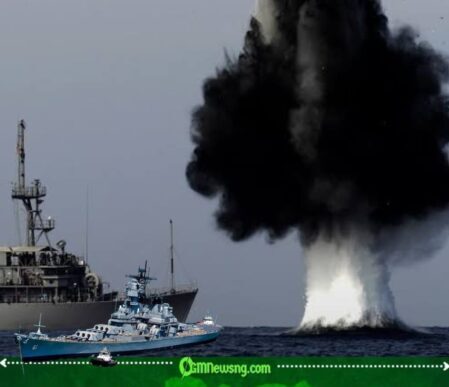
Hormuz has returned to the center of global tension after reports emerged that the U.S. military has so far been unable to locate or destroy suspected explosive mines hidden within the Strait of Hormuz, one of the world’s most strategically important waterways. The development has triggered fresh concern among security experts and energy analysts, many of whom warn that the issue is not merely about explosives beneath the sea, but about what their disappearance could symbolize regarding modern naval warfare. In a region already crowded with military vessels, drones, surveillance aircraft, and political suspicion, the possibility that mines may remain undetected has introduced a dangerous layer of uncertainty into an already fragile security environment.
U.S. Military Struggles to Locate Explosive Mines in Strait of Hormuz
The Strait of Hormuz serves as a critical gateway for global energy supplies, connecting Gulf oil producers to international markets through a narrow maritime passage routinely patrolled by military forces from multiple countries. Because enormous volumes of crude oil and liquefied natural gas pass through the area daily, even the suggestion of underwater explosives can create immediate economic and geopolitical anxiety. Reports suggesting the U.S. military has not successfully identified or eliminated suspected mines have therefore generated significant attention among maritime observers and defense analysts.
Hormuz has historically been associated with military standoffs, tanker incidents, and naval confrontations involving regional powers and Western allies. Sea mines remain particularly feared because they are relatively inexpensive to deploy compared to the immense costs required to detect and neutralize them. Naval experts frequently describe mine warfare as one of the most effective forms of asymmetrical conflict, allowing smaller or less technologically advanced actors to challenge larger military powers. Online reactions to the latest reports have ranged from serious concern to biting satire, with critics mocking the idea that billion-dollar defense systems could struggle against hidden underwater explosives that rely on decades-old concepts.
Missing Mines in Hormuz Spark Fears of a Dangerous Intelligence Gap
Military analysts note that modern mine detection operations are extremely difficult in congested waterways like Hormuz due to underwater terrain conditions, commercial vessel traffic, environmental interference, and the possibility of deliberately concealed deployment methods. Advanced sonar systems, unmanned underwater vehicles, and reconnaissance aircraft are often used in such operations, yet experts acknowledge that complete certainty is rarely achievable in maritime security. The inability to confirm the location or destruction of suspected mines can itself become strategically damaging because uncertainty forces governments and shipping companies into costly precautionary measures.
Surveillance concerns surrounding Hormuz also arrive during a broader period of maritime insecurity across the Middle East, where drone incidents, tanker seizures, cyber threats, and regional military competition have intensified in recent years. President Donald J. Trump’s administration has continued emphasizing military readiness and deterrence in strategic waterways, but critics argue the latest reports expose the complicated reality of underwater warfare, where technological superiority does not always guarantee immediate operational success. Some analysts believe rival actors may intentionally exploit this vulnerability to create fear and economic disruption without directly engaging in open military confrontation.
Pentagon Faces Pressure Over Undetected Mines in Key Oil Route
Hormuz now stands as both a strategic chokepoint and a symbolic reminder that global power can still be challenged by relatively simple weapons hidden beneath unstable waters. While officials are expected to continue surveillance and security operations in the region, the unresolved questions surrounding the suspected mines may continue fueling debate over military preparedness, maritime vulnerability, and the growing unpredictability of modern geopolitical conflict.
Table of Contents
Discover more from OGM News NG
Subscribe to get the latest posts sent to your email.