




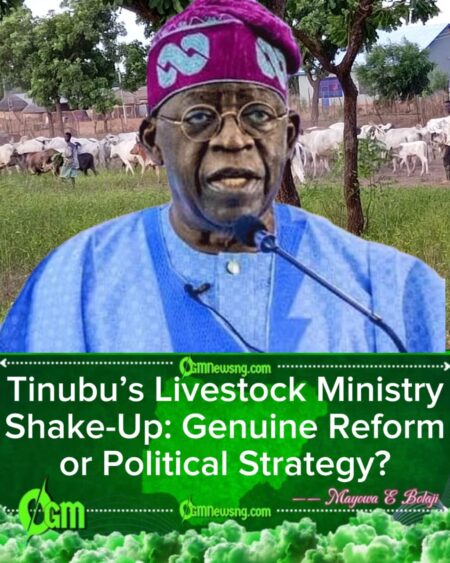
President Bola Ahmed Tinubu has reiterated his administration’s commitment to resolving the longstanding clashes between herders and farmers through structural reforms. He emphasized that the creation of the Ministry of Livestock is a strategic initiative aimed at establishing a formal platform for dialogue, regulation, and modernization of Nigeria’s livestock sector. According to the President, this move is critical to fostering peace and enhancing agricultural productivity nationwide.
President Bola Ahmed Tinubu highlighted that decades of tension between herders and farmers have caused loss of lives, destruction of farmlands, and displacement of communities. He explained that the Livestock Ministry is designed to centralize efforts, provide resources, and implement strategies to end open grazing practices that often spark violent confrontations. The President stressed that sustainable peace is essential for the nation’s economic growth.
President Bola Ahmed Tinubu called on herder associations across the country to actively participate in the Ministry’s programs. He urged them to embrace modern livestock practices, including ranching, and to comply with policies that ensure safety, security, and sustainable farming. The President maintained that cooperation with the Ministry will protect livelihoods, enhance community safety, and strengthen Nigeria’s agricultural economy.
Call to End Open Grazing and Surrender Illegal Weapons
President Bola Ahmed Tinubu strongly appealed to herders to cease open grazing immediately. He argued that unregulated grazing has become a major source of tension, property destruction, and violent confrontations in farming communities. The President noted that ending this practice is necessary for restoring peace and ensuring national food security.
President Bola Ahmed Tinubu urged all herder associations to surrender illegal weapons in their possession, warning that unregulated firearms exacerbate violence and obstruct peacebuilding efforts. He emphasized that collaboration with law enforcement and adherence to security regulations will create safer communities and reduce clashes over farmland. The President assured herders that incentives, including access to grazing reserves and modern ranch facilities, would be provided to encourage compliance.
President Bola Ahmed Tinubu appealed to local communities to support the transition to regulated livestock practices. He explained that ending open grazing requires collective efforts from herders, farmers, and government authorities. The President maintained that a collaborative approach will prevent further conflicts, stabilize agricultural production, and enable harmonious coexistence between herding and farming communities.
The Livestock Ministry: A Strategic Tool for Peace and Economic Growth
President Bola Ahmed Tinubu described the Livestock Ministry as a central hub for implementing policies to modernize animal husbandry in Nigeria. He explained that the Ministry’s responsibilities include overseeing grazing management, facilitating veterinary services, promoting ranching projects, and ensuring fair land use. According to the President, these initiatives are designed to professionalize livestock rearing, reduce disputes, and drive economic growth.
President Bola Ahmed Tinubu emphasized that the Ministry will act as a mediator between herders and farmers, offering platforms for conflict resolution, training, and awareness campaigns. He highlighted that by adopting modern technologies and best practices, herders can increase productivity while protecting farmland and local communities. The President noted that this framework aligns with broader government objectives of food security, rural employment, and economic diversification.
President Bola Ahmed Tinubu reaffirmed his administration’s commitment to ensuring the success of the Livestock Ministry. He assured Nigerians that policies would be continuously evaluated to address emerging challenges and that all stakeholders—farmers, herders, and local authorities—would be actively engaged. The President concluded by emphasizing that cooperation, compliance, and modernization are crucial for achieving harmony, boosting agricultural output, and securing Nigeria’s socio-economic future.
Table of Contents
Discover more from OGM News NG
Subscribe to get the latest posts sent to your email.