






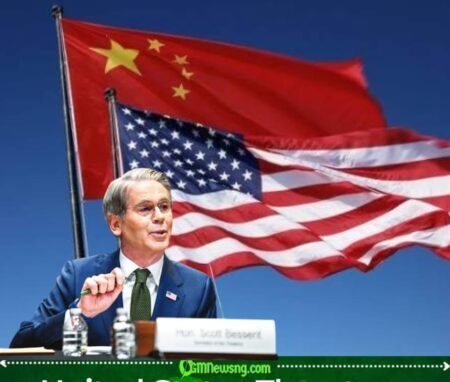
United States officials have warned that additional sanctions could be imposed on Chinese oil refineries accused of supporting Iran’s energy trade, intensifying pressure on networks believed to help Tehran sustain crucial oil revenues despite existing restrictions. The warning reflects the continuation of Washington’s broader “maximum pressure” strategy aimed at limiting Iran’s financial capacity and constraining activities tied to its regional influence and nuclear ambitions.
The latest developments come amid growing tensions between Washington and Beijing over sanctions enforcement, energy trade, and competing geopolitical interests in the Middle East and Asia. Chinese “teapot” refineries, which are smaller independent processing plants, have increasingly become a focal point of U.S. scrutiny because they are considered major buyers of discounted Iranian crude oil.
United States authorities have argued that targeting these refineries and associated shipping networks is essential to disrupting Iran’s oil economy, while Chinese officials continue to criticize such measures as violations of international trade norms and national sovereignty.
ESCALATING PRESSURE ON IRAN’S ENERGY NETWORK
United States sanctions policy toward Iran has expanded significantly in recent months, with Washington increasingly targeting companies, vessels, and financial entities connected to Iranian oil exports.
The strategy is designed to reduce the flow of revenue that U.S. officials believe supports Iran’s military activities, regional allies, and weapons programs, including drone and missile development.
US enforcement efforts have therefore extended beyond Iran itself, focusing heavily on international buyers and intermediaries accused of helping Tehran bypass restrictions through complex trade and shipping arrangements.
US AND GROWING TENSIONS WITH CHINA
US officials have increasingly identified Chinese refineries as central players in Iran’s oil export system, particularly because China remains one of the largest importers of Iranian crude.
United States pressure has contributed to rising friction with Beijing, whose government has publicly opposed the sanctions and instructed domestic companies not to comply with certain U.S. measures.
United States actions have also raised concerns about the broader impact on global trade relations, especially as tensions between Washington and Beijing continue to affect multiple economic and strategic sectors.
IMPACT ON GLOBAL ENERGY MARKETS
The sanctions threat has fueled uncertainty in global oil markets, where traders remain sensitive to disruptions involving Iran, China, and major shipping routes connected to Middle Eastern energy supplies.
Chinese independent refiners have reportedly explored ways to minimize exposure to sanctions, including restructuring operations, establishing new entities, and modifying financial arrangements tied to oil purchases.
The evolving situation illustrates how energy markets increasingly intersect with geopolitical rivalry, where economic measures can influence supply chains, shipping costs, and broader international trade dynamics.
UNITED STATES AND INTERNATIONAL DIPLOMATIC PRESSURE
United States officials continue to defend the sanctions strategy as necessary for limiting Iran’s financial resources and countering activities viewed as destabilizing to regional security.
United States warnings regarding secondary sanctions have also placed pressure on foreign banks, shipping firms, and intermediaries that may facilitate transactions connected to Iranian oil exports.
United States diplomatic efforts are expected to remain closely tied to broader negotiations involving Iran, China, and regional security concerns in the Middle East.
FUTURE OUTLOOK FOR SANCTIONS AND ENERGY TRADE
Analysts suggest that further sanctions could deepen economic tensions between Washington and Beijing while encouraging alternative financial and trade mechanisms designed to bypass U.S. restrictions.
Observers also note that continued enforcement actions may influence how global energy buyers structure transactions and manage exposure to geopolitical risks in the future.
As developments continue, the dispute underscores the growing connection between international energy markets, strategic competition, and the expanding use of economic sanctions as a foreign policy tool.
Table of Contents
Discover more from OGM News NG
Subscribe to get the latest posts sent to your email.