









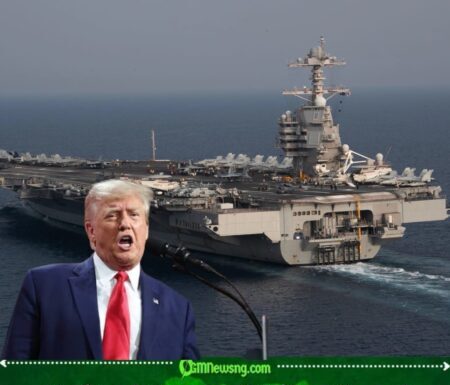
United States has announced plans to withdraw the world’s largest aircraft carrier, the USS Gerald R. Ford, from its current deployment in the Middle East, signaling a strategic adjustment in naval positioning and regional military presence. The decision comes amid shifting security priorities and ongoing evaluations of global force distribution.
The carrier’s withdrawal marks a notable change in operational posture, as the vessel has been a central component of U.S. naval deterrence and rapid response capability in the region. Military analysts view the move as part of broader recalibrations in defense strategy.
US officials emphasize that such redeployments are routine and reflect evolving global commitments rather than a reduction in overall readiness.
Strategic Rebalancing of Naval Forces
United States defense planners are increasingly focused on reallocating naval assets to address emerging challenges in other regions, including the Indo-Pacific. The repositioning of the USS Gerald R. Ford is seen as part of this broader strategic shift.
United States Navy operations often involve rotational deployments to ensure global coverage while maintaining flexibility in response to international developments.
US military leadership has indicated that the decision aligns with long-term force optimization goals.
United States and Regional Security Considerations
United States presence in the Middle East has historically been linked to deterrence, maritime security, and protection of international shipping routes. The withdrawal of a major carrier temporarily alters the visible military footprint in the region.
United States officials maintain that other assets will continue to support ongoing security operations and partnerships with regional allies.
US strategy continues to prioritize stability while adapting to changing geopolitical conditions.
Naval Operations and Global Deployment Patterns
United States naval deployments are typically structured around flexibility, allowing carriers like the USS Gerald R. Ford to rotate between theaters as needed. This ensures sustained global presence without permanent concentration in a single region.
US Navy doctrine emphasizes mobility and rapid response capability as core elements of its operational design.
US planners regularly reassess deployment schedules based on intelligence and strategic requirements.
United States Military Messaging and Deterrence
United States military messaging surrounding carrier deployments often serves both operational and symbolic purposes, signaling capability and readiness to allies and adversaries alike. The presence or absence of a carrier can influence regional perceptions of power balance.
US officials stress that deterrence does not depend on a single asset but on the broader integrated force structure.
United States continues to maintain a wide range of naval and air capabilities across multiple regions.
Future Positioning and Operational Outlook
US is expected to continue adjusting its global naval posture in response to evolving threats and strategic priorities. The withdrawal of the USS Gerald R. Ford reflects a dynamic approach to force management.
US defense leadership is likely to announce further rotations and deployments in the coming months as part of routine operational planning.
Ultimately, US naval strategy remains focused on maintaining global reach, flexibility, and readiness across all theaters of operation.
Table of Contents
Discover more from OGM News NG
Subscribe to get the latest posts sent to your email.