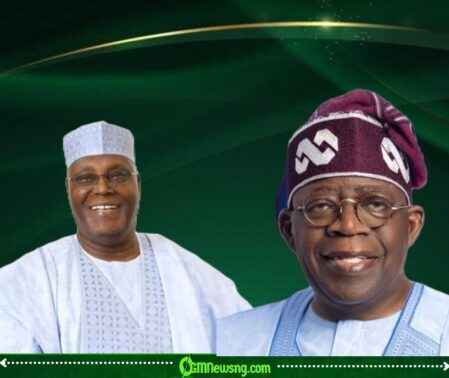

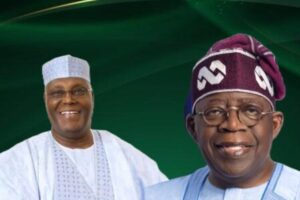



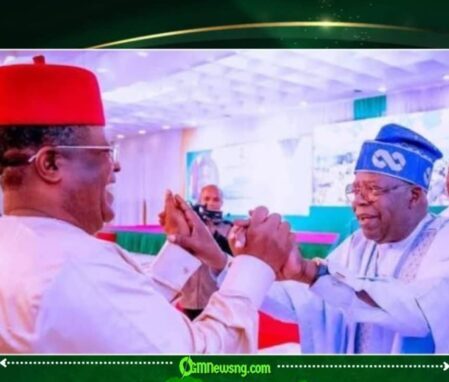
Tinubu has once again become the center of national political discussion after Minister of Works David Umahi declared that God would keep President Bola Tinubu in power until 2031. The statement, delivered as an expression of confidence in the president’s future, has generated intense reactions from supporters and critics alike, while raising questions about the growing political calculations surrounding the 2027 presidential election.
Tinubu’s Re-Election Talk Gains Momentum as Minister Predicts Long Rule
Umahi’s remarks reflect strong political support for President Tinubu and appear to signal confidence among some members of the administration regarding the president’s chances of seeking and winning a second term. The minister framed his position as both a personal conviction and a reflection of his belief in the direction of the current administration.
The statement arrives at a time when discussions about 2027 are becoming increasingly visible despite the election still being some distance away. Political observers note that endorsements from senior government officials often serve multiple purposes: demonstrating loyalty, energizing supporters, and shaping public perception about the strength of an incumbent administration. While supporters view Umahi’s comments as a vote of confidence in Tinubu’s leadership, critics argue that electoral outcomes remain the exclusive decision of Nigerian voters.
Umahi Backs Tinubu Ahead of 2027 Presidential Race
The Tinubu prediction also highlights a broader reality in Nigerian politics: conversations about future elections often begin years before ballots are cast. Recent political developments have shown increasing efforts by political actors across party lines to position themselves strategically ahead of 2027. Such declarations are common in political systems where incumbency, party structures, and public perception play significant roles in shaping electoral contests.
Beyond the political symbolism, analysts suggest that the administration’s performance on economic reforms, infrastructure delivery, inflation management, employment creation, and national security will likely have a greater influence on voter decisions than endorsements from public officials. The government has continued to emphasize major infrastructure projects and economic restructuring efforts, while opposition voices maintain that citizens will ultimately judge the administration based on measurable outcomes rather than predictions. As a result, discussions surrounding Tinubu and 2031 are expected to remain part of the national conversation as political stakeholders gradually prepare for the next electoral cycle.
For now, Umahi’s declaration stands as one of the strongest public endorsements of President Tinubu’s future political prospects. Whether the prediction becomes reality will depend not on forecasts, faith, or political enthusiasm alone, but on the choices Nigerians make when the country eventually heads to the polls. OGM News Nigeria will continue monitoring developments surrounding Tinubu, the road to 2027, and the wider political forces shaping Nigeria’s democratic future.
Table of Contents
Discover more from OGM News NG
Subscribe to get the latest posts sent to your email.