

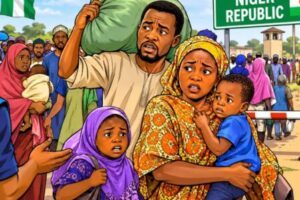







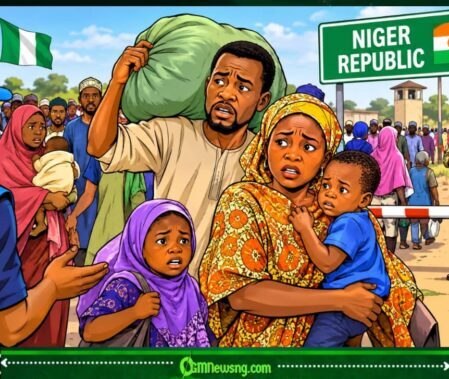
Nigeria’s insecurity problem don reach another worrying level as nearly 64,000 Nigerians don cross enter neighbouring Niger Republic since the beginning of 2026 to escape violence for their communities, according to the United Nations High Commissioner for Refugees (UNHCR). As if the country never get enough problems to manage, thousands of citizens now dey seek protection outside their homeland, while the authorities continue to face serious questions about the safety of ordinary Nigerians. For many affected families, the issue don pass political arguments and government promises. Na survival matter be this.
Insecurity in Northern Nigeria that causes Violence Continues to Push Families Across Borders
For statement wey UNHCR release on November 10, 2026, the agency warn say nearly 64,000 people don arrive Niger this year after fleeing violence for northern Nigeria. The major causes include attacks by Islamist militant groups and armed criminal gangs. Some hundreds of Nigerians don also reportedly escape enter neighbouring Benin Republic. Apparently, insecurity no dey respect international boundaries, and displaced families no dey wait for political explanations before searching for somewhere safe to sleep.
UNHCR Director of External Relations, Dominique Hyde, explain say most of the newly arrived Nigerians don settle for Diffa, southeastern Niger, and Tahoua, western Niger. For October alone, approximately 1,200 people enter Diffa, while another 3,400 arrive Tahoua. More than 23,000 people, with children making up over two-thirds, don arrive Diffa since January. The numbers show say this no be ordinary movement of people looking for better opportunities. Na families wey violence don force to abandon their homes and familiar surroundings.
Niger’s Humanitarian Resources Under Pressure as Children Face insecurity Conditions
The irony of the situation be say Niger, the country wey Nigerians dey run enter for safety, already dey struggle with serious humanitarian challenges. UNHCR report say the country dey host more than 500,000 refugees and asylum-seekers, including approximately 327,500 Nigerians. Now, the fresh arrivals don add more pressure to an already stretched system. Many displaced families dey live inside temporary shelters without enough food, clean drinking water, healthcare and other basic necessities. Some women even dey trek several kilometres to fetch water for their families. For people wey escape violence, the struggle for basic survival never end.
Another serious concern na the registration of newly arrived refugees. UNHCR reveal say only around five per cent of Nigerians wey arrive this year don receive formal registration. Without proper documentation, many people fit struggle to access humanitarian assistance and essential public services. The agency also report cases of malnutrition, respiratory infections and poor sanitation among the displaced population. Meanwhile, UNHCR dey seek $11.4 million to support humanitarian operations across Niger, Nigeria and Benin, including $2 million for immediate assistance covering food, water, shelter, healthcare and protection. Even the communities wey dey welcome the refugees dey face additional pressure from insecurity and climate-related difficulties.
The latest figures raise serious questions about the continuing insecurity crisis and the protection of Nigerian citizens. When nearly 64,000 people have to cross an international border to find safety within one year, the situation deserves more than political statements and competing explanations. Government responsibility, effective security measures and humanitarian support must remain priorities. For now, OGM News Pidgin go continue to monitor developments and bring readers further updates as the situation unfolds.
Table of Contents
Discover more from OGM News NG
Subscribe to get the latest posts sent to your email.