
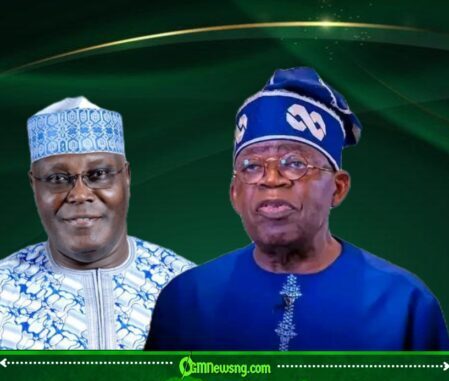
Former Vice President Atiku Abubakar has demanded an explanation from President Bola Tinubu over his third consecutive absence from the United Nations General Assembly, raising questions about Nigeria’s diplomatic visibility, reported lobbying expenses in the United States and whether the President’s past American legal controversies have anything to do with his repeated decision to stay away from New York. With Vice President Kashim Shettima once again leading Nigeria’s delegation, the nation appears to have perfected the art of sending a representative to an international gathering while the person whose seat was reportedly secured remains conspicuously unavailable.
Atiku Asks Tinubu to Explain Third Consecutive UNGA Absence
Atiku’s criticism followed the Presidency’s announcement that Shettima would represent Tinubu at the 81st UNGA in 2026. The Vice President also represented Nigeria at the 79th and 80th sessions in 2024 and 2025, respectively. Atiku argues that three consecutive presidential absences have moved beyond routine delegation into a pattern demanding a public explanation.
The former vice president insists that UNGA is not merely an annual gathering where world leaders exchange pleasantries, pose for photographs and return home with folders thick enough to suggest productivity. It is a platform for bilateral diplomacy, investment discussions, trade negotiations and development partnerships. In Atiku’s view, sending Shettima repeatedly may satisfy the attendance register, but it cannot entirely replace the President’s personal authority and visibility.
The satirical question now circulating around Nigeria’s diplomatic waiting room is whether the country’s presidential seat at the United Nations has become a permanent reservation that nobody intends to occupy. If the chair could speak, it might request a transfer to someone whose travel itinerary includes New York.
The $9 Million Lobbying Question Meets the Empty Chair Mystery
Atiku also questioned reports that the Tinubu administration spent up to $9 million on American lobbyists, asking what Nigerians received in return if the President continued to stay away from a major diplomatic event held in the United States. He argued that the country’s diplomatic and economic interests should not be compromised by repeated presidential absence.
In the world of political satire, this creates an unusual accounting puzzle: if millions were reportedly spent persuading Americans to listen to Nigeria, why does Nigeria’s own President allegedly need convincing to show up where the Americans are already gathered? Perhaps the lobbyists were hired to negotiate a meeting between the President and his calendar.
Atiku’s questions about Tinubu’s American legal history have further complicated the controversy. He cited a 1993 forfeiture proceeding involving funds associated with Tinubu and companies linked to him. The publicly available court material records a forfeiture of approximately $460,000, while Atiku has raised questions about whether this history has any connection with Tinubu’s repeated absence from UNGA.
However, Atiku explicitly stated that he was not claiming Tinubu was legally barred from entering the United States. No such travel restriction has been established by the material reviewed for this report. The distinction matters: asking whether a historical legal controversy influences diplomatic decisions is not the same as proving that it does.
Tinubu’s UNGA Absence Raises Fresh Diplomatic Questions
Atiku has challenged the Presidency to explain whether Tinubu’s absence is connected to legal, diplomatic, medical or personal considerations. He also questioned whether the President’s past controversies in the United States have become a burden on Nigeria’s relationship with Washington. The Presidency, meanwhile, has defended the decision to focus on domestic matters, with a presidential aide saying Tinubu’s absence would not diminish Nigeria’s international standing.
The resulting diplomatic drama has all the ingredients of a political comedy: a seat reportedly secured near President Donald Trump, a President who does not occupy it, a Vice President dispatched to represent the country, and an opposition figure demanding to know whether the missing occupant is avoiding the chair or merely allowing it to enjoy a quiet diplomatic holiday.
For Nigerians watching from home, the central issue remains larger than one chair. It concerns transparency, presidential representation and whether the country is receiving the full diplomatic value expected from participation in international forums. While delegation is constitutionally and diplomatically possible, Atiku argues that repeated presidential absence deserves a clear explanation rather than another round of official silence.
Atiku’s challenge has turned Tinubu’s UNGA absence into a debate about accountability, diplomatic visibility and the cost of unanswered questions. Whether the explanation comes from the Presidency, a diplomatic briefing or another carefully worded statement remains to be seen. Until then, Nigerians may wish to keep an eye on the empty seat, the missing explanation and the next chapter of this international political mystery. Watch out for future updates on OGM News NG.
Table of Contents
Discover more from OGM News NG
Subscribe to get the latest posts sent to your email.