









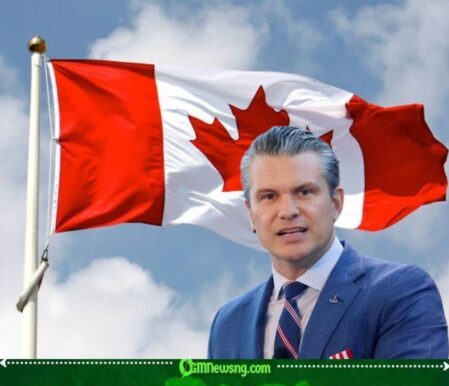
The long-standing military relationship between the United States and Canada is facing another uncomfortable test after US Defense Secretary Pete Hegseth reportedly issued a classified directive imposing new restrictions on military cooperation between the two neighbouring countries. The development comes amid growing diplomatic disagreements, trade disputes and renewed tensions between President Donald J. Trump and the Canadian government. Apparently, even decades of military partnership are no longer enough to guarantee that Washington and Ottawa will remain on the same page.
According to officials familiar with the directive, Pete Hegseth circulated the classified memo last week, instructing the Pentagon to narrow aspects of its defence engagement with Canada. Although the full contents of the document have not been made public, the development has raised questions about the future of a military partnership that has existed for generations. For two countries that have spent decades presenting themselves as dependable security partners, the latest development suggests that political disagreements are increasingly finding their way into military affairs.
Pete Hegseth’s Directive Raises Questions About the Future of US-Canada Military Relations
Pete Hegseth’s reported decision represents another significant development in the deteriorating relationship between Washington and Ottawa. According to the reporting, the classified directive is intended to ensure that American military engagements with Canada advance specific US defence priorities. However, the precise activities affected by the restrictions remain unclear, leaving observers wondering whether military exchanges, defence consultations, joint exercises and other bilateral engagements could face tighter conditions.
A Pentagon spokesperson, Sean Parnell, maintained that the United States was taking steps to ensure its cooperation with Canada serves tangible American defence objectives. Nevertheless, the Pentagon also clarified that the directive would not affect intelligence sharing or military cooperation through NATO and the North American Aerospace Defense Command (NORAD). In other words, the military relationship has not been completely dismantled, but Pete Hegseth’s latest move has certainly introduced another layer of uncertainty into an already complicated partnership.
Pete Hegseth’s Move Comes Amid Trump’s Growing Disagreements With Canada
The latest restrictions cannot be separated from the broader political disagreements between President Donald Trump and Canadian Prime Minister Mark Carney. Relations between the two countries have deteriorated over Trump’s repeated suggestions that Canada should become America’s 51st state, disagreements over trade tariffs and Washington’s criticism of Canada’s defence contributions. Canada has responded to American trade measures with retaliatory tariffs while continuing to defend its position as a committed NATO ally.
Interestingly, Pete Hegseth’s relationship with Canada’s defence establishment has also attracted criticism following his previous remarks about Canadian military personnel and their contributions to allied operations. The latest development is particularly significant because the United States and Canada have historically worked together through NATO, NORAD and other security arrangements. The two countries have also maintained close intelligence ties through the Five Eyes partnership. Although the Pentagon insists that some of these critical arrangements remain unaffected, an official from a Five Eyes country reportedly indicated that American information-sharing with allies had declined across several platforms over the past year.
For now, the full implications of Pete Hegseth’s directive remain uncertain, particularly because the classified memo has not been publicly examined and the specific restrictions have not been independently established. Nevertheless, the development raises an important question about how far political disagreements between two neighbouring countries can influence their shared security responsibilities. While Washington may describe the move as a review of defence priorities, Ottawa could understandably see it as another indication that its relationship with its most powerful neighbour is entering unfamiliar territory. Stay with OGM News NG for further updates as this developing diplomatic and military dispute unfolds.
Table of Contents
Discover more from OGM News NG
Subscribe to get the latest posts sent to your email.