







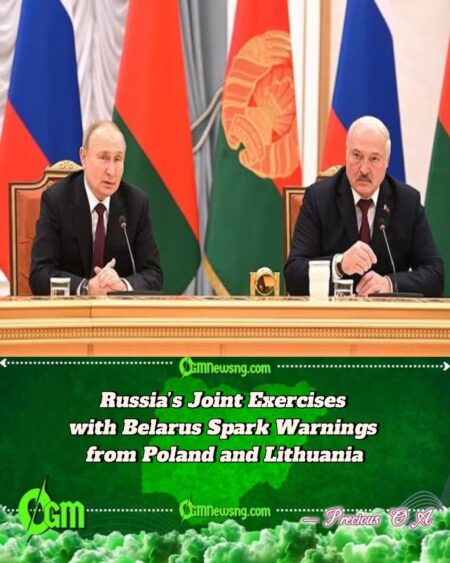
Russia holds military drills with Belarus at a time when global security analysts are watching closely. The large-scale exercises, involving thousands of troops and extensive equipment, include live-fire training, joint air and ground maneuvers, and simulations of defensive operations. Officials from both Moscow and Minsk emphasize that the drills are defensive, but their timing has generated intense international discussion.
Russia has steadily expanded its military use of Belarusian territory in recent years. The country’s strategic location on NATO’s eastern flank makes it a critical partner for Moscow. By conducting these exercises, Russia strengthens its regional presence while signaling to the West that its alliance with Belarus is deep and enduring.
Russia and Belarus have frequently pointed to Western military activities near their borders as justification for their joint drills. Officials claim that NATO’s expansion and ongoing exercises in Eastern Europe leave them with no choice but to enhance preparedness. While these explanations are familiar, critics argue that the underlying goal is intimidation rather than defense.
The growing partnership between Moscow and Minsk reflects more than military strategy—it highlights Belarus’s reliance on Russia for political and economic support. In return, Moscow ensures that its western neighbor remains firmly within its sphere of influence, reducing the risk of Belarus aligning with Western powers in the future.
Reactions from NATO and Neighboring States
Russia holds military drills with Belarus while NATO remains on high alert. Alliance officials describe the exercises as provocative, stressing that they come amid already heightened regional tensions. Neighboring states such as Poland and Lithuania have taken precautionary steps, including reinforcing border defenses and placing rapid-response units on standby.
Russia’s maneuvers have been met with condemnation from European leaders, who see the drills as an attempt to pressure NATO’s eastern flank. Poland has accused Moscow of deliberately escalating tensions, while Lithuania has argued that the exercises extend beyond training, potentially serving as preparation for more aggressive moves.
Russia’s actions have also prompted a response from Washington. U.S. defense officials reiterated their commitment to supporting NATO allies, deploying additional intelligence resources to monitor troop movements. American leaders insist that while they do not seek confrontation, they will not ignore actions that threaten regional stability.
The contrast between Moscow’s reassurances and Western alarm highlights the deep mistrust on both sides. Russia accuses NATO of exaggeration and hypocrisy, pointing to the alliance’s own frequent military drills near Russian borders. This mutual suspicion keeps diplomatic solutions out of reach and fuels a cycle of military posturing.
Broader Implications for Regional Security
Russia holds military drills with Belarus not only to demonstrate readiness but also to reinforce long-term strategic goals. The exercises serve as a reminder that Moscow can project power deep into Eastern Europe, complicating NATO’s defensive planning. For Belarus, the drills reaffirm a dependence on Russian support in both security and political matters.
Russia’s decision to expand the scope of such exercises may also pave the way for a permanent military presence in Belarus. Analysts warn that if Russian forces remain stationed there, the regional security balance could shift dramatically, giving Moscow increased leverage over neighboring states. Such a development would likely trigger new countermeasures from NATO.
Russia, while framing the drills as routine, understands their symbolic value. They send a message to adversaries that any attempt to isolate or weaken Moscow will be met with demonstrations of strength. At the same time, the drills highlight the risks of miscalculation in a region where tensions are already dangerously high.
Ultimately, Russia’s joint exercises with Belarus reveal the fragile state of European security. While officials insist the operations are defensive, their scale and symbolism underscore the deeper geopolitical contest unfolding between Moscow and the West. For policymakers, the challenge lies in preventing these shows of force from escalating into direct conflict.
Table of Contents
Discover more from OGM News NG
Subscribe to get the latest posts sent to your email.