







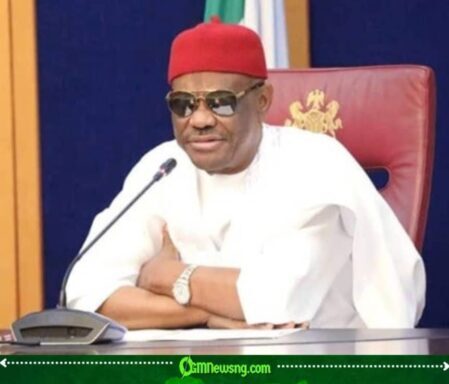
Rivers Support has become the latest flashpoint in Nigeria’s evolving political landscape after Federal Capital Territory Minister Nyesom Wike declared that Rivers State has no option but to continue supporting President Bola Tinubu. The statement, delivered during a Rainbow Coalition luncheon in Port Harcourt, immediately reignited discussions about political loyalty, federal influence, and the future direction of one of Nigeria’s most politically strategic states. While supporters describe the position as practical and development-focused, critics have questioned whether any democratic society should ever be told it has “no option.”
Rivers Support and the Politics of Development
Speaking before candidates contesting forthcoming governorship, national assembly, and state assembly elections, Wike argued that Rivers Support for President Tinubu is justified by what he described as unprecedented federal attention to the state. He pointed to appointments of Rivers indigenes into key federal positions and major projects executed under the current administration as evidence that the relationship has produced measurable benefits.
The minister’s comments align with a series of similar remarks made over recent months in which he has repeatedly positioned Rivers as a leading center of political support for the president. His argument reflects a broader political philosophy often heard in Nigerian politics: that strategic alliances with the federal government can translate into development opportunities and increased access to national resources.
Coalition Politics and the Future of Rivers
The latest declaration did not emerge in isolation. Over the past several months, Wike and his allies have promoted political structures such as the Rainbow Coalition and the Renewed Hope Family, initiatives that seek to unite influential figures across party lines around support for President Tinubu. Several political stakeholders and elders within Rivers have publicly endorsed these efforts, describing them as vehicles for maintaining political relevance and attracting federal attention to the state.
At the same time, Rivers remains one of Nigeria’s most politically complex states. The state has experienced intense political rivalries, shifting alliances, and prolonged debates over leadership and influence. Recent comments by Wike suggest that while coalition members have agreed on support for Tinubu, discussions about preferred candidates for other offices remain unresolved. This indicates that beneath the appearance of unity, significant political negotiations are still ongoing.
The controversy surrounding Rivers Support may therefore extend beyond a simple endorsement of a president. It reflects a larger national conversation about whether political support should be driven primarily by development outcomes, party ideology, personal loyalty, or voter independence. As election preparations continue, Rivers is likely to remain a key laboratory for testing these competing ideas.
For now, Wike’s message is unmistakable: Rivers Support for Tinubu remains, in his view, both politically beneficial and strategically necessary. Whether voters ultimately agree with that assessment will become clearer as campaigns intensify and political actors move from declarations at luncheon tables to contests at the ballot box. OGM News Nigeria will continue monitoring developments as the state’s political story unfolds.
Table of Contents
Discover more from OGM News NG
Subscribe to get the latest posts sent to your email.