









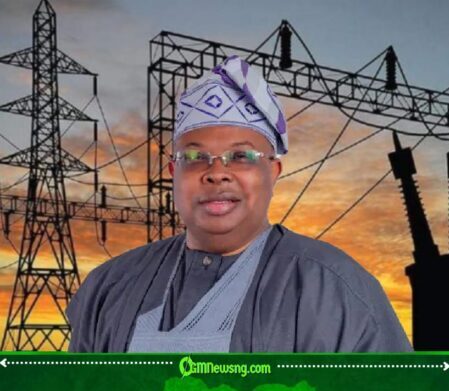
Minister of Power Joseph Tegbe has announced a shift in the way the Federal Government intends to assess progress in Nigeria’s electricity sector, saying the success of the power industry should be measured by the number of communities that receive electricity rather than simply by the volume of megawatts generated.
Joseph Tegbe said the new approach would place greater emphasis on the actual impact of electricity projects on Nigerians, particularly communities that have remained underserved or disconnected from reliable power supply. His position reflects a broader focus on ensuring that improvements in generation and transmission translate into tangible access for households, businesses and communities.
TEGBE CHALLENGES TRADITIONAL POWER METRICS
For years, discussions about Nigeria’s electricity sector have largely centred on generation capacity and the number of megawatts available on the national grid. However, Joseph Tegbe argued that generation figures alone do not adequately capture the experience of Nigerians who continue to struggle with inadequate or unreliable electricity.
According to the minister, the real measure of progress should be whether electricity reaches the people who need it. This means giving greater attention to communities connected to the grid, the reliability of supply and the ability of electricity infrastructure to support economic activity.
FOCUS ON COMMUNITIES AND ELECTRICITY ACCESS
The new emphasis could place community-level electricity access at the centre of future assessments of government performance in the power sector. Under such an approach, projects would be judged not only by their technical capacity but also by the number of people and communities benefiting from them.
Joseph Tegbe’s position also highlights the importance of expanding electricity infrastructure beyond major urban centres. Improved access in rural and underserved communities could support small businesses, education, healthcare, agriculture and other economic activities that depend heavily on reliable electricity.
IMPLICATIONS FOR NIGERIA’S POWER SECTOR
The minister’s declaration comes amid continuing efforts by the Federal Government to address longstanding challenges affecting Nigeria’s electricity industry, including inadequate generation, transmission constraints, distribution problems and limited access in many communities.
A stronger focus on actual electricity access could encourage policymakers and sector operators to place greater emphasis on completing projects that directly connect communities to dependable power. It could also provide a different basis for evaluating whether investments in the sector are producing meaningful results for citizens.
A SHIFT FROM OUTPUT TO IMPACT
By prioritising communities electrified over megawatts generated, Joseph Tegbe is advocating a measurement system that focuses more directly on outcomes experienced by Nigerians.
The minister’s position suggests that the ultimate objective of the power sector is not merely to produce electricity, but to ensure that the electricity reaches homes, businesses and communities in a reliable and sustainable manner.
The Federal Government’s ability to translate this approach into measurable improvements in electricity access will be closely watched as OGM News NG will give update as Nigeria continues its efforts to reform the power sector and expand reliable electricity supply across the country.
Table of Contents
Discover more from OGM News NG
Subscribe to get the latest posts sent to your email.