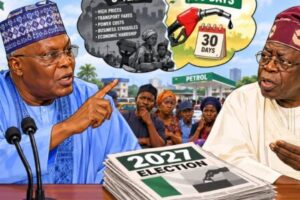





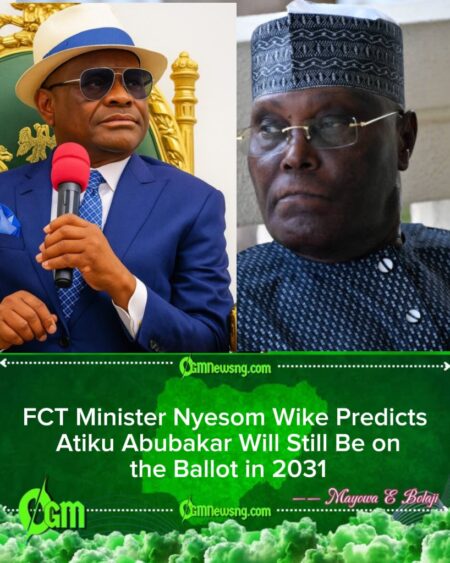
Nyesom Wike has ignited fresh political controversy after describing Atiku Abubakar as a “serial loser,” while confidently predicting that the veteran politician may still contest for Nigeria’s presidency in 2031. The remarks, delivered with characteristic bluntness, have quickly reverberated across Nigeria’s political space, drawing both criticism and support from different quarters.
The statement highlights the long-standing political rivalry and ideological differences between Wike and Atiku, both prominent figures within Nigeria’s political ecosystem. By making such a direct and provocative claim, Nyesom Wike has once again positioned himself as a central voice in national political debates, unafraid to challenge established figures and narratives.
Political observers note that the language used by Nyesom Wike is unusually sharp, even by Nigerian political standards. His comments have not only intensified discussions about Atiku Abubakar’s political journey but have also reignited broader conversations about leadership credibility, electoral performance, and the future of opposition politics in Nigeria.
Implications for Nigeria’s Political Landscape and Party Dynamics
The remarks by Nyesom Wike carry significant implications for Nigeria’s political landscape, particularly within opposition circles. Atiku Abubakar, who has contested multiple presidential elections, remains a key figure in national politics, and Wike’s comments may deepen existing divisions within political parties and alliances.
Analysts suggest that Nyesom Wike’s prediction of a 2031 presidential bid by Atiku Abubakar underscores a broader narrative about political persistence and ambition in Nigeria. While some view Atiku’s continued participation in elections as a sign of resilience, others interpret it as an indication of stagnation within opposition leadership structures.
The development also raises questions about party cohesion and strategic direction ahead of future elections. As political actors reposition themselves, statements like those made by Nyesom Wike could influence alliances, voter perception, and the overall competitiveness of Nigeria’s democratic process.
Public Reaction and Broader Political Interpretation
Public reactions to the comments by Nyesom Wike have been mixed, reflecting Nigeria’s diverse political opinions. Supporters of Wike have praised his boldness and willingness to speak candidly about political realities, arguing that his remarks highlight concerns shared by many voters regarding repeated electoral outcomes.
Conversely, supporters of Atiku Abubakar have criticized the statement as disrespectful and dismissive of a seasoned statesman’s contributions to national development. They argue that political ambition should not be ridiculed and that democratic systems thrive on the freedom to contest and recontest elections.
Beyond immediate reactions, political analysts believe that the exchange represents a deeper struggle over influence and narrative control within Nigeria’s political sphere. As the country gradually looks toward future election cycles, figures like Nyesom Wike and Atiku Abubakar will continue to shape discourse, strategy, and voter engagement in what remains a dynamic and evolving democracy.
Table of Contents
Discover more from OGM News NG
Subscribe to get the latest posts sent to your email.