

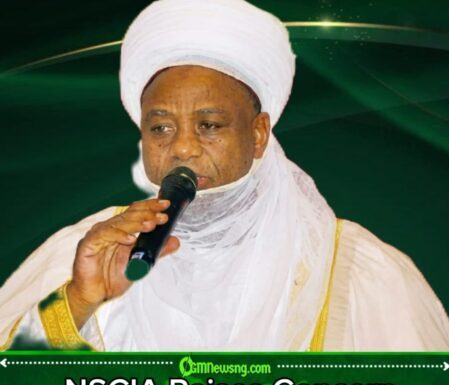
The Nigerian Supreme Council for Islamic Affairs (NSCIA), led by the Sultan of Sokoto, Muhammadu Sa’ad Abubakar III, has raised serious concerns over what it describes as possible religious bias in the ongoing prosecution of former Kaduna State Governor Nasir El-Rufai. In a country where virtually every major political disagreement eventually acquires lawyers, analysts, supporters, critics and at least three competing conspiracy theories, the intervention of the country’s foremost Islamic body has added a significant new dimension to an already controversial case.
NSCIA Breaks Its Silence and Questions the Direction of the Case
The NSCIA said it had deliberately avoided commenting on El-Rufai’s prosecution because it initially considered the matter a normal judicial process and trusted the judiciary to uphold justice. However, the council said recent developments had created concerns suggesting that factors beyond the legal allegations could be influencing public discussions around the case, including what it described as an underlying religious bias.
In a development that may leave Nigeria’s political spectators reaching for another bowl of popcorn, the council warned against allowing individuals with vested religious interests to weaponise public institutions or the legal system for a sectarian agenda. The NSCIA also urged restraint in public commentary, stressing the importance of fairness and avoiding statements capable of prejudicing the proceedings or worsening existing tensions. In other words, the council appears to be saying that the courtroom should remain a courtroom and not gradually transform into a national religious wrestling arena.
A Legal Battle Now Carrying Bigger National Questions
El-Rufai has been facing multiple corruption-related prosecutions involving allegations including abuse of office, fraud, money laundering and financial misconduct connected to his years as governor of Kaduna State. The Independent Corrupt Practices and Other Related Offences Commission (ICPC) has maintained that its actions are based on legal processes and evidence, while El-Rufai has denied the allegations and pleaded not guilty to charges brought against him.
The NSCIA’s intervention is therefore important because it shifts part of the national conversation beyond the immediate question of guilt or innocence. The bigger concern now being raised is whether justice must not only be done but must also be clearly seen to be free from political, ethnic or religious influence. Nigeria has enough complicated fault lines already; adding suspicion of sectarian bias to a high-profile prosecution could turn a legal matter into a much wider national argument, complete with microphones, social media experts and people who suddenly become constitutional lawyers after breakfast.
Ultimately, El-Rufai’s prosecution remains a matter for the courts, where evidence and the law should determine the outcome. But the NSCIA’s warning has introduced an important question about fairness, perception and public confidence in Nigeria’s institutions. OGM News NG will continue to monitor developments as the legal battle unfolds and as Nigerians watch to see whether the case remains strictly about the allegations—or whether the controversy surrounding it grows into something much bigger.
Table of Contents
Discover more from OGM News NG
Subscribe to get the latest posts sent to your email.