




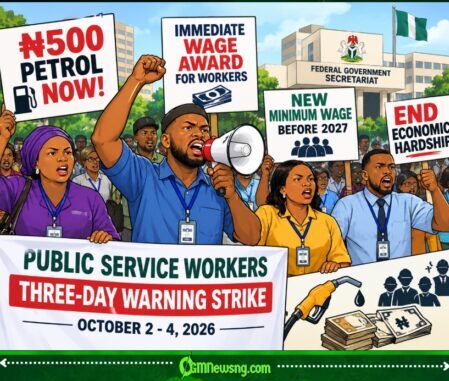
Warning Strike don finally enter Nigerian workers’ calendar as public servants under the Joint National Public Service Negotiating Council (JNPSNC) begin three-day industrial action over economic hardship, petrol prices, workers’ welfare and fresh negotiations for a new national minimum wage.
The council, through a circular dated October 1 and signed by its National Secretary, Olowoyo Gbenga, directed workers across federal, state and local government establishments to join the action from midnight on Friday, October 2, until Sunday, October 4, 2026. The council said the decision followed what it described as the Federal Government’s failure to respond to demands submitted to President Bola Tinubu on September 21.
Nigerian Workers Say Economic Hardship Don Become Too Much
According to the council, Nigerian Workers and their dependants are feeling the heavy pressure of the current economic situation, with the cost of basic needs continuing to make life difficult for ordinary Nigerians. The JNPSNC said the economic and mental hardship had become increasingly unbearable, prompting the decision to mobilise its members nationwide.
The workers are demanding, among other things, a reduction of petrol prices to ₦500 per litre, an immediate wage award and the establishment of a tripartite committee to negotiate a new national minimum wage ahead of 2027. In the language of the workers, the time to act and mobilise has arrived—meaning government offices fit experience serious quietness as workers observe their warning.
Minimum Wage And Petrol Price Enter The Gbas Gbos
The current national minimum wage is ₦70,000, following the 2024 legislation that increased the statutory minimum from ₦30,000. That figure remains the legal minimum, although the labour movement has continued to raise concerns about whether workers’ earnings are keeping pace with the cost of living and other economic pressures.
The Nigerian Workers’ latest Warning Strike demand for another tripartite negotiation does not mean a new minimum wage has already been approved. Rather, the council is calling for government, labour and employers to return to negotiations. Its separate demand for an immediate wage award is also different from changing the statutory minimum wage.
Petrol prices have equally become a major part of the dispute, with workers linking high transportation and living costs to the wider economic pressure facing households. Their demand for petrol at ₦500 per litre therefore adds another major issue to the table, alongside wages and workers’ welfare.
For now, the Economic Hardship that workers say is driving the action has produced another major labour-government showdown. Whether the three-day strike ends quietly on Sunday or opens the door to fresh negotiations will depend largely on the response from government and the outcome of discussions with labour. OGM News Pidgin will continue to follow the gbas gbos as both sides decide their next move.
Table of Contents
Discover more from OGM News NG
Subscribe to get the latest posts sent to your email.