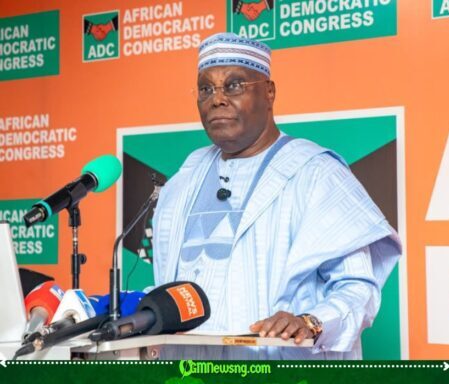
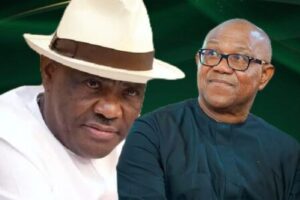



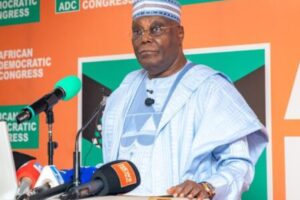
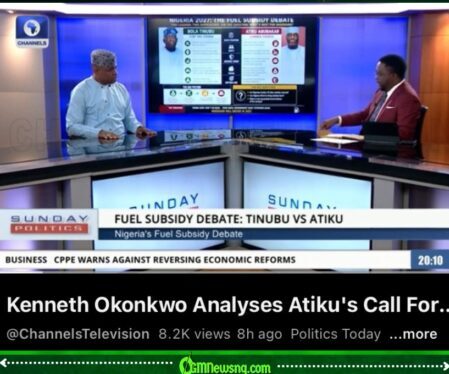
Kenneth Okonkwo, a chieftain of the African Democratic Congress (ADC) and spokesperson for Atiku Abubakar’s political camp, has reignited Nigeria’s long-running fuel-subsidy argument, accusing President Bola Tinubu’s administration of making life harder for ordinary Nigerians while allowing the naira’s purchasing power to deteriorate. Speaking on Sunday Politics, Okonkwo argued that the government’s decision to remove petrol subsidy has pushed up transportation, production and household expenses, while the increase in the minimum wage has failed to keep pace with the rising cost of living. His remarks arrive just days after Finance Minister Taiwo Oyedele said the reforms generated ₦15.8 trillion in subsidy-related savings and resources for the Federation between June 2023 and December 2025.
Okonkwo Questions the Price Nigerians Are Paying for “Savings”
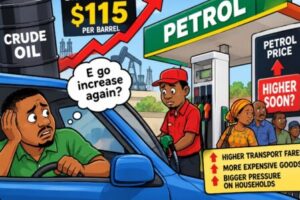
Okonkwo’s argument is essentially that Nigerians may have been handed a larger-looking national purse while being asked to survive with a smaller-looking wallet. He cited petrol prices of roughly ₦1,300 per litre and calculated that filling a 100-litre tank would require about ₦130,000, contrasting that with the ₦70,000 minimum wage. He said Atiku’s proposed Fuel Affordability Plan would not simply resurrect the old subsidy arrangement but would seek to lower production costs by making crude oil available to domestic refineries on affordable terms.
The government, however, has presented a markedly different account. Oyedele recently said the removal of subsidy and related reforms mobilised ₦15.8 trillion in resources for the Federation, with about ₦5.4 trillion accruing to the Federal Government and roughly ₦10.4 trillion going to states and local governments. He also stressed that the figure was not a giant pile of cash sitting untouched in one government account; rather, the savings appeared through increased revenues and fiscal resources.
The Naira Becomes the Political Punchline
Okonkwo’s most dramatic claim was his assertion that the naira had become “useless” under President Tinubu, arguing that nominal wage increases had not necessarily translated into stronger purchasing power. His comparison between the old ₦30,000 minimum wage and the current ₦70,000 wage was intended to illustrate his broader argument: Nigerians can receive more naira in numerical terms while still being able to buy less with it.
That debate is unlikely to disappear quietly. The Tinubu administration continues to defend the reforms as necessary measures to correct longstanding economic distortions, while critics point to the immediate burden placed on households after subsidy removal and naira reforms. Reuters reported this month that Finance Minister Oyedele said the reforms helped avert a potential economic collapse, while acknowledging that they had intensified the short-term cost-of-living crisis. Meanwhile, the government has insisted that it will not restore the old fuel-subsidy regime.
For now, Nigeria appears to have two competing economic stories: one built around trillions of naira in savings and fiscal restructuring, and another built around petrol prices, shrinking purchasing power and the daily struggle of households. Okonkwo’s intervention has therefore reopened a politically explosive question ahead of 2027: if subsidy removal was necessary to rescue the economy, when will ordinary Nigerians feel rescued themselves? OGM News NG will continue to watch the subsidy, naira and cost-of-living debate for further developments
Table of Contents
Discover more from OGM News NG
Subscribe to get the latest posts sent to your email.