







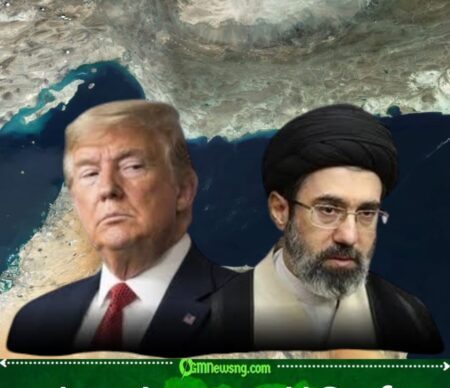
Iran has stated that a U.S. plan to guide ships through the strategically critical Strait of Hormuz violates the terms of an existing ceasefire, intensifying tensions in an already fragile geopolitical environment. Iranian officials argue that any form of American maritime coordination or presence in the waterway represents interference that undermines previously agreed conditions intended to reduce hostilities and maintain stability in the region.
The statement comes amid ongoing uncertainty surrounding the ceasefire, which was established after a period of heightened conflict involving the United States and Iranian forces. Although the agreement temporarily reduced direct confrontations, disagreements over interpretation and enforcement have continued to create friction between the parties involved.
Iran’s warning reflects deeper concerns about sovereignty and control over the Strait of Hormuz, a vital global shipping route through which a significant portion of the world’s oil supply passes, making any disruption or dispute particularly consequential for international markets.
STRATEGIC IMPORTANCE OF THE STRAIT OF HORMUZ
Iran has long emphasized its strategic influence over the Strait of Hormuz, viewing it as a critical asset in both economic and security terms, with the ability to affect global energy flows and geopolitical leverage.
The narrow waterway connects major oil-producing regions to global markets, meaning that even minor disruptions or tensions in the area can have immediate and far-reaching consequences on energy prices and supply stability worldwide.
Because of its importance, the strait has historically been a focal point of geopolitical competition, with various nations seeking to ensure uninterrupted access while also safeguarding their strategic interests.
MARITIME CONTROL DURING CEASEFIRE
The nation has maintained that its management of the strait during the ceasefire is both lawful and necessary to ensure security following recent hostilities and maritime incidents that heightened regional instability.
It’s officials have argued that external involvement, particularly from foreign military forces, disrupts the delicate balance established under the ceasefire and risks provoking unnecessary escalation.
Iran’s stance suggests that unilateral actions by the United States could be interpreted as violations of trust, potentially complicating ongoing diplomatic engagements and negotiations.
INTERNATIONAL RESPONSE AND RISING TENSIONS
Iran’s accusation has drawn attention from international observers, many of whom are closely monitoring the situation due to its potential impact on global trade, shipping routes, and overall regional security.
Reports indicate that the U.S. initiative to assist or guide ships is being presented as a measure intended to ensure safe navigation and reduce logistical challenges within the congested waterway.
However, differing interpretations of intent highlight the fragile nature of the ceasefire, where even limited operational actions can be perceived as escalatory by opposing sides.
IRAN AND DIPLOMATIC UNCERTAINTY
Iran has continued to engage in discussions with international mediators while simultaneously expressing concern over actions it views as inconsistent with ongoing peace efforts and agreed frameworks.
Iran’s leadership has indicated that meaningful diplomatic progress depends heavily on adherence to established agreements, including respect for maritime arrangements during sensitive periods of ceasefire.
Iran’s position underscores the broader challenge of maintaining trust in diplomatic processes when strategic interests and interpretations of agreements differ significantly.
FUTURE OF THE CEASEFIRE AND REGIONAL STABILITY
The situation in the Strait of Hormuz remains uncertain, with the potential for either renewed cooperation or increased tension depending on how current disagreements are addressed by all parties involved.
Observers suggest that maintaining stability will require careful coordination, transparency, and a consistent commitment to the principles outlined in the ceasefire agreement.
As developments continue to unfold, the balance between security, sovereignty, and global economic interests will remain central in determining the future trajectory of the region.
Table of Contents
Discover more from OGM News NG
Subscribe to get the latest posts sent to your email.