







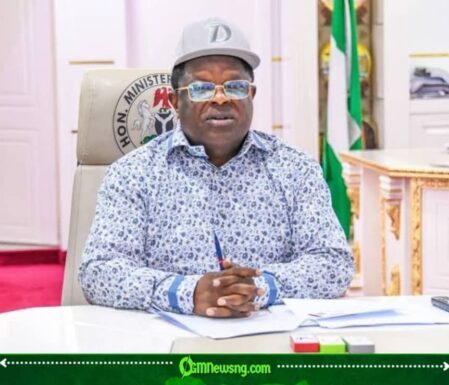
Insecurity remains one of the biggest political and social concerns facing Nigeria, yet Minister of Works David Umahi has expressed strong confidence that President Bola Ahmed Tinubu’s administration will significantly reduce the crisis within the next four years. His remarks come at a time when many Nigerians continue to demand stronger responses to kidnappings, insurgency, communal violence, and armed attacks affecting several regions of the country.
Umahi argued that the Tinubu administration is pursuing a broader national recovery strategy that combines security investment with infrastructure development and economic reforms. According to the minister, roads, transportation networks, and improved economic opportunities are not separate from security policy but are central to restoring stability and government control across vulnerable areas. His comments appear aimed at reassuring citizens that the administration sees insecurity as a long-term structural issue requiring more than military operations alone.
The minister’s optimism also reflects the government’s growing attempt to defend the pace of ongoing reforms despite mounting public frustration over economic hardship and security fears. Supporters of the administration believe the government inherited deeply rooted problems that cannot disappear overnight, while critics argue that Nigerians are increasingly tired of hearing future promises while facing present dangers.
Insecurity:Umahi’s Confidence in Tinubu Sparks Debate Over Nigeria’s Security Reality
Nigeria’s insecurity crisis has evolved over several years into a complex national challenge involving insurgency in the northeast, banditry in the northwest, separatist tensions in the southeast, and kidnapping-for-ransom operations across multiple states. Security analysts have repeatedly warned that weak infrastructure, unemployment, poor intelligence coordination, and limited state presence in rural communities have allowed criminal groups to expand their operations.
The Tinubu administration has continued funding security agencies while simultaneously pushing ambitious infrastructure projects intended to improve trade, mobility, and economic integration. Officials within government circles increasingly argue that abandoned roads and isolated communities unintentionally create safe environments for criminal networks. Umahi’s latest statement appears closely aligned with this broader argument that economic development and security enforcement must operate together rather than separately.
Public reaction, however, has remained sharply divided. Some Nigerians welcomed the minister’s confidence, viewing it as necessary optimism during difficult national conditions. Others responded with skepticism and satire, questioning whether promises of future stability can comfort citizens currently living with fear and uncertainty. On social media, users joked that insecurity may soon receive “retirement benefits” if government projections become reality, while critics insist that measurable results matter more than political assurances.
Despite the criticism, the administration appears determined to maintain its message that long-term reforms require patience. Whether Umahi’s prediction eventually becomes a political victory or another controversial promise may depend largely on how quickly Nigerians begin experiencing visible improvements in both security and economic conditions. OGM News Nigeria will continue monitoring developments surrounding the government’s security strategy, infrastructure projects, and public response in the months ahead.
Table of Contents
Discover more from OGM News NG
Subscribe to get the latest posts sent to your email.